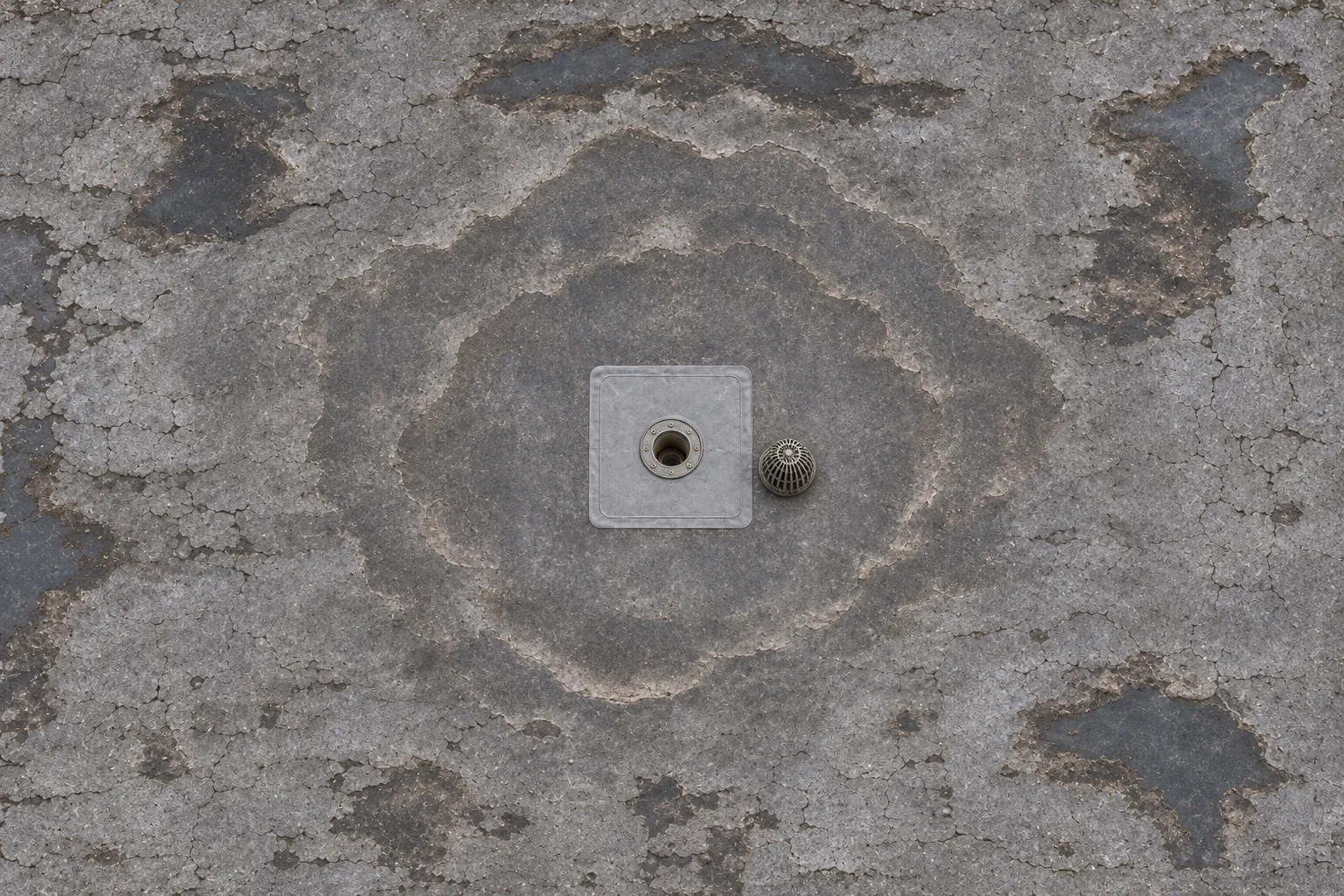
Flat Roof Repair
Membrane and built-up roofs with split seams, blisters, ponding at drains, or worn patches on warehouses and offices.
Flat roof repair in Bethlehem
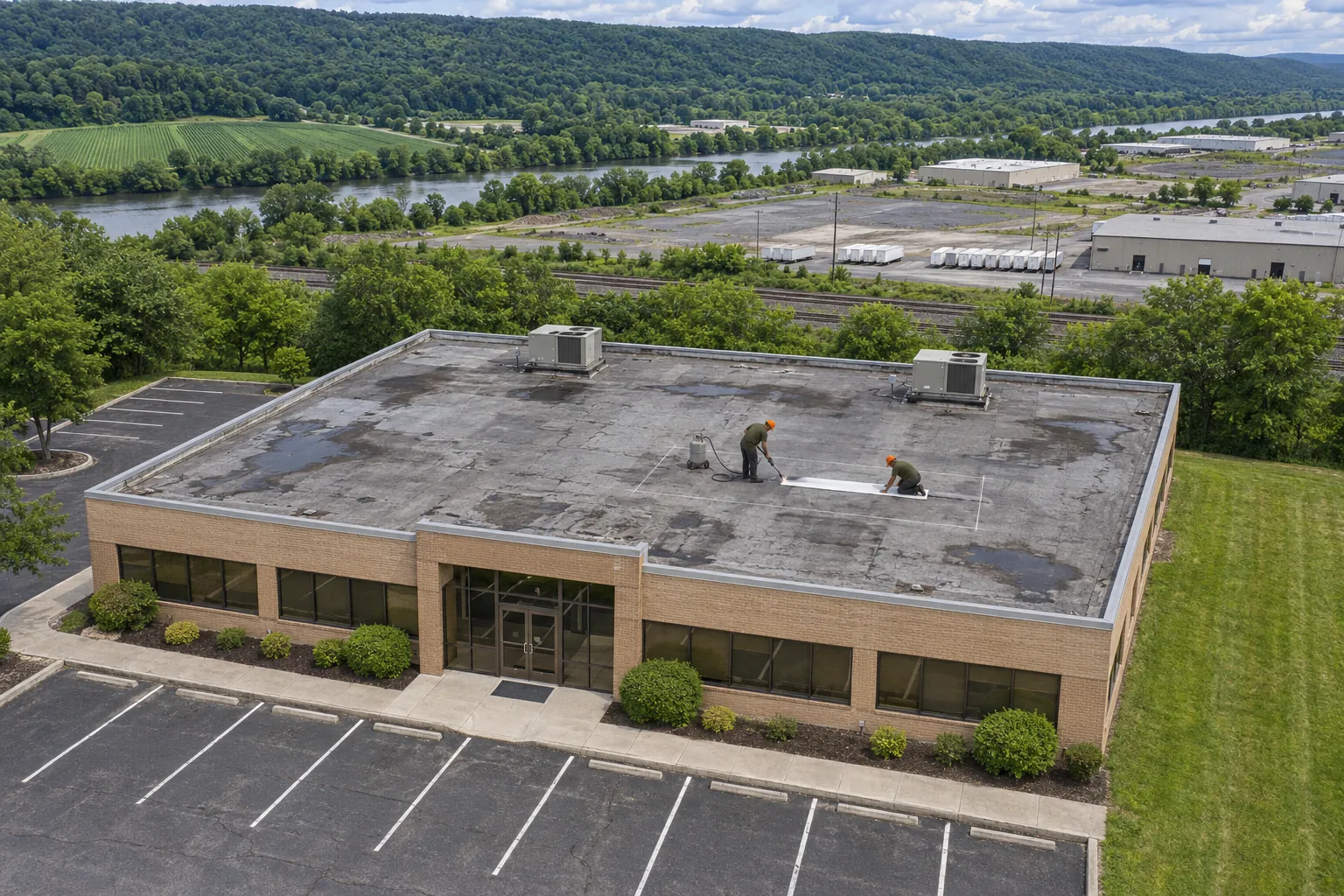
As a Bethlehem commercial roof repair contractor, we trace leaks on flat, metal, and industrial roofs, then repair the seam, drain, or flashing that let water in.
Our Bethlehem commercial roof repair work runs through four services, each matched to the roof system and to the building working underneath it.
Membrane and built-up roofs with split seams, blisters, ponding at drains, or worn patches on warehouses and offices.
Flat roof repair in Bethlehem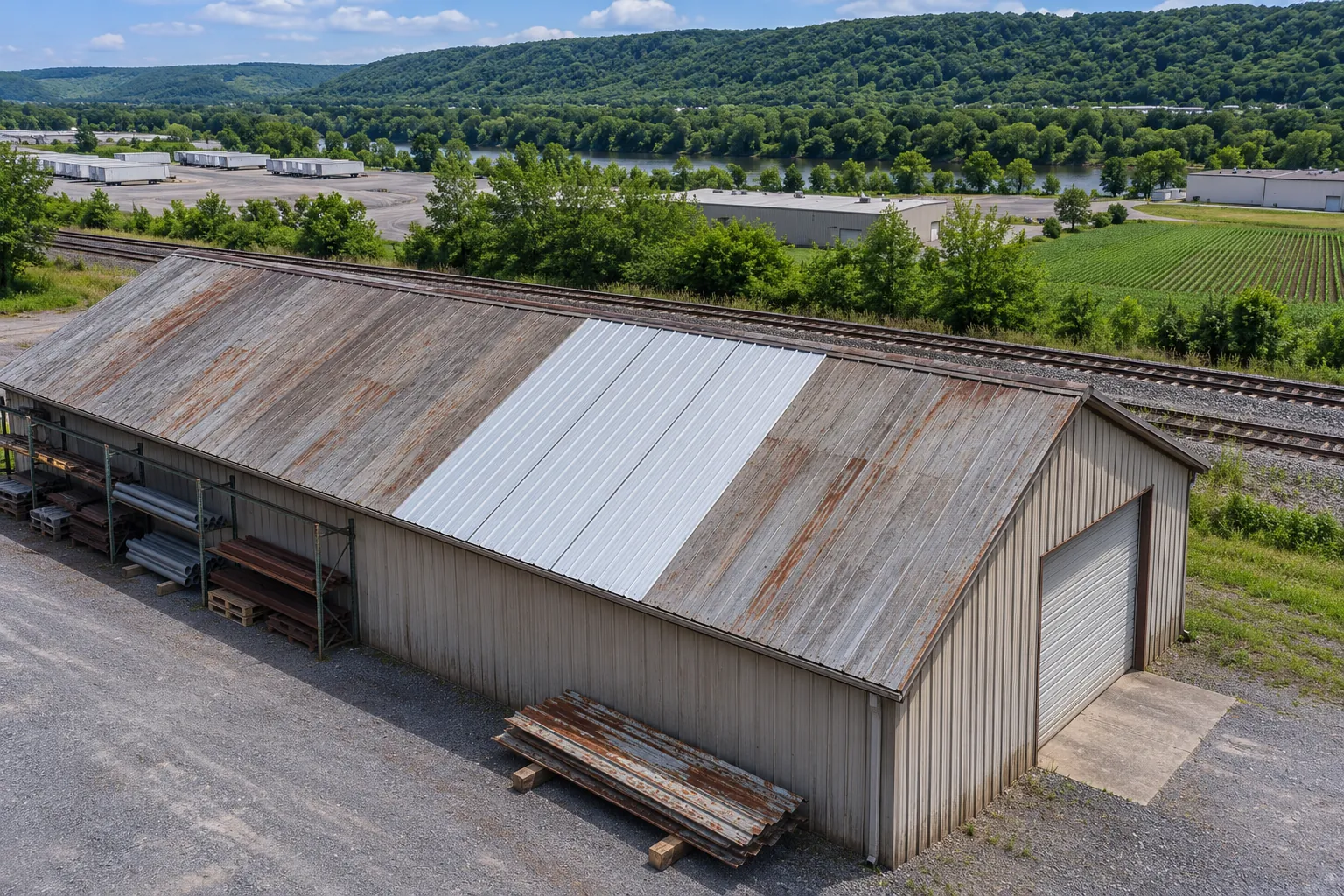
Exposed-fastener and lapped panel roofs with rusted sheets, backed-out screws, open laps, or hail punctures.
Metal roof repair details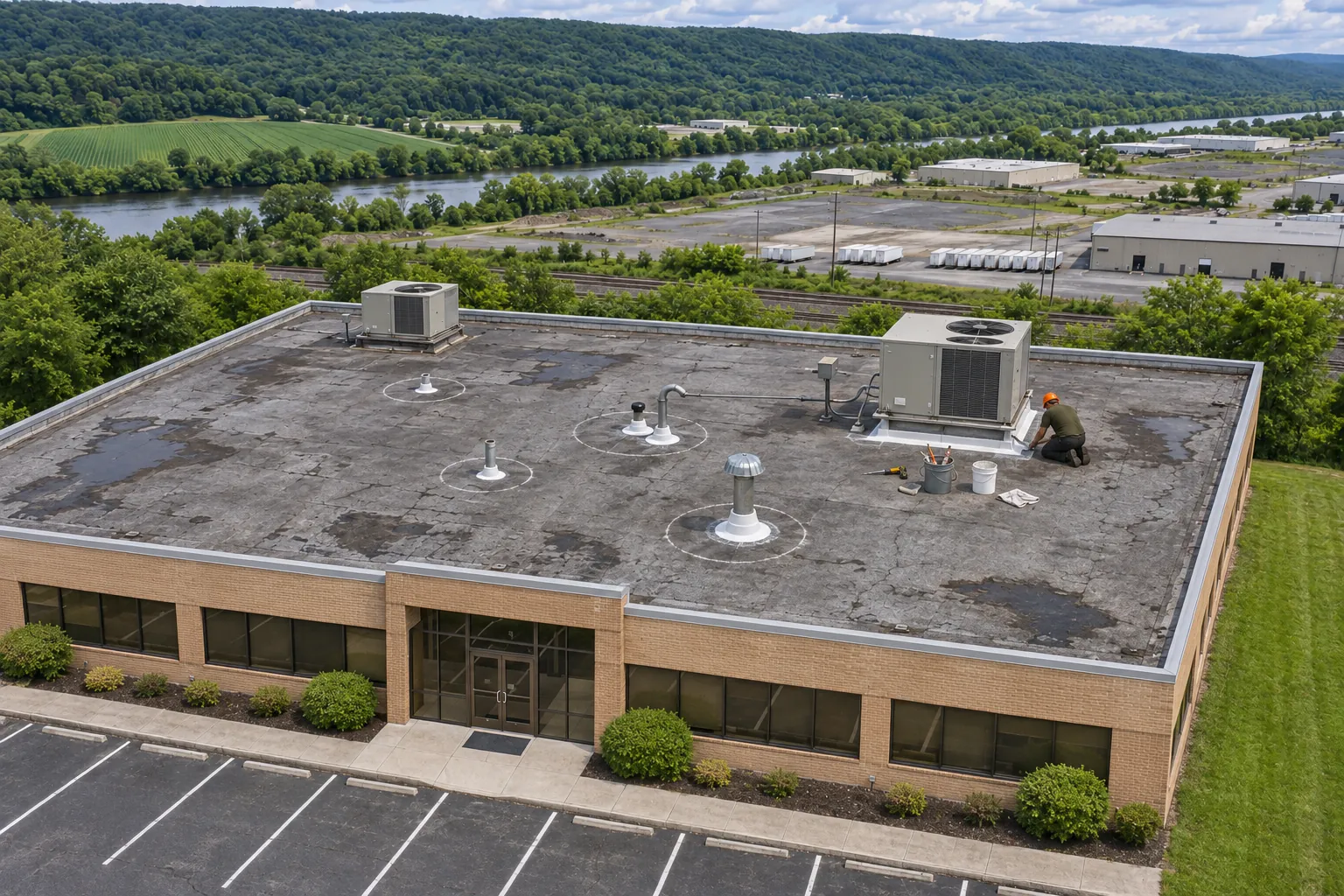
Ceiling stains and drips whose source is still unknown, including parapet, thaw, and rooftop unit leaks.
How we find roof leaks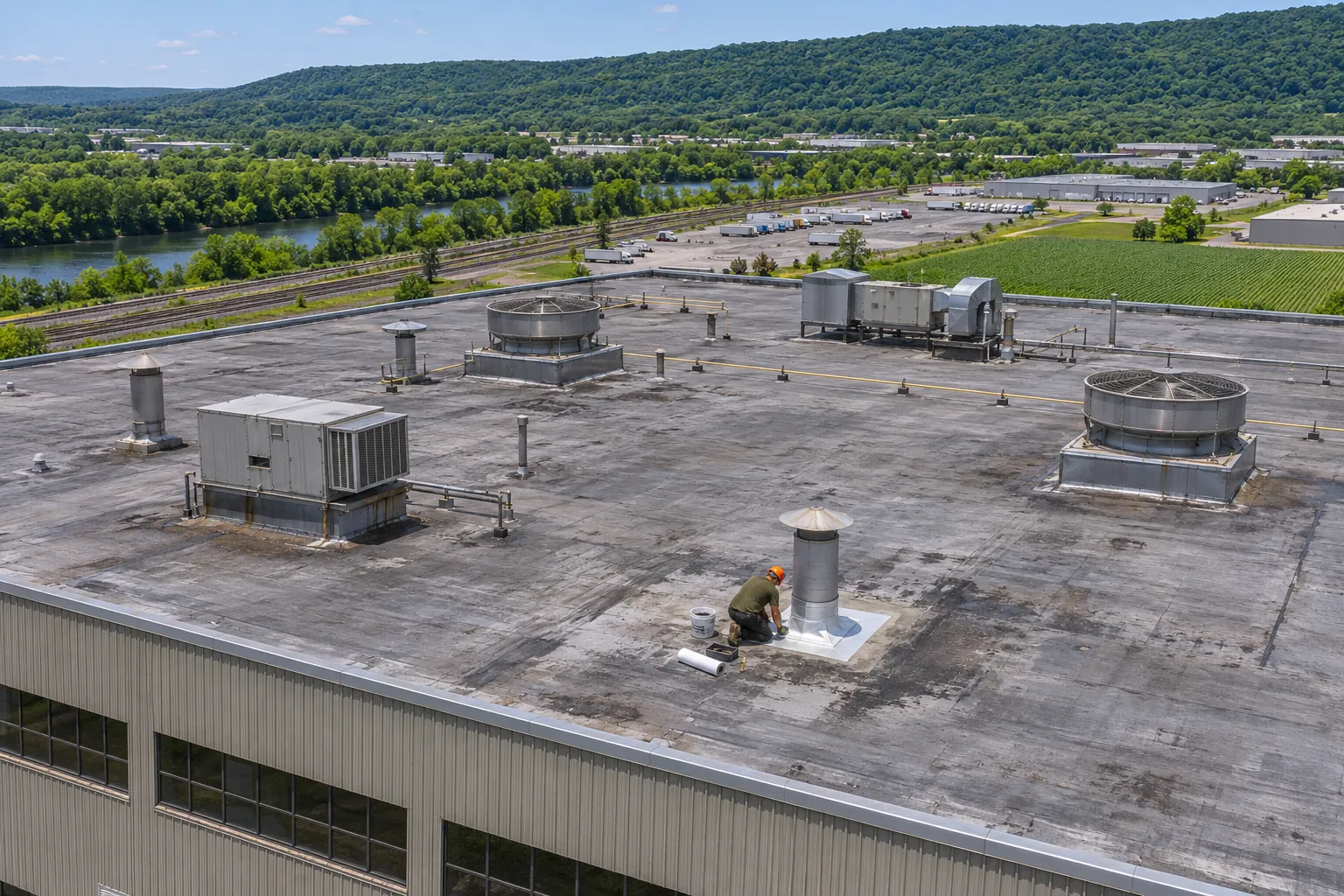
Plant roofs with exhaust stacks, heavy service traffic, interior drains, and production running below the work.
Repairs over production floors| Building | Flat Roof Repair | Commercial Metal Roof Repair | Commercial Roof Leak Repair | Industrial Roof Repair |
|---|---|---|---|---|
| Logistics warehouses | Seams and drains over racking | Metal dock canopies | Drips traced across bays | Large bays with forklift traffic |
| Brick industrial buildings | Old patch layers reworked | Rarely | Parapet and wall leaks | Stacks and vents reflashed |
| Medical office buildings | Low-slope roofs over clinics | Rarely | Leaks near sensitive rooms | Rarely |
| Metal storage buildings | Rarely | Panel swaps and laps | Thaw leaks at eaves | Rarely |
| Production plants | Membrane around equipment curbs | Metal additions on plants | Leaks over machinery | Phased repairs over lines |
These roof conditions show up on Bethlehem buildings before and after leaks. The chip tells you how soon each one needs a look.
Ponds that sit two days after a storm point to a sagging deck, a slow drain, or crushed insulation under the membrane.
Open laps on membrane or metal let wind-driven rain under the roof cover, and each freeze widens the gap a little more.
Active water over offices, stock, or equipment needs containment first, then a trace from the stain back to the entry point.
Coping joints and termination bars that pull away let water behind the wall flashing, and it surfaces feet away inside.
Rings on ceiling tiles near a unit can come from curb flashing, condensate lines, or open service panels, so we check all three.
Hail can puncture brittle membrane and split old patches; an inspection after the storm separates new damage from years of wear.
Can you repair one section of a commercial roof? Often, yes, when the repair edges land on dry, firm roofing. Core cuts and a walk of each bay decide it.
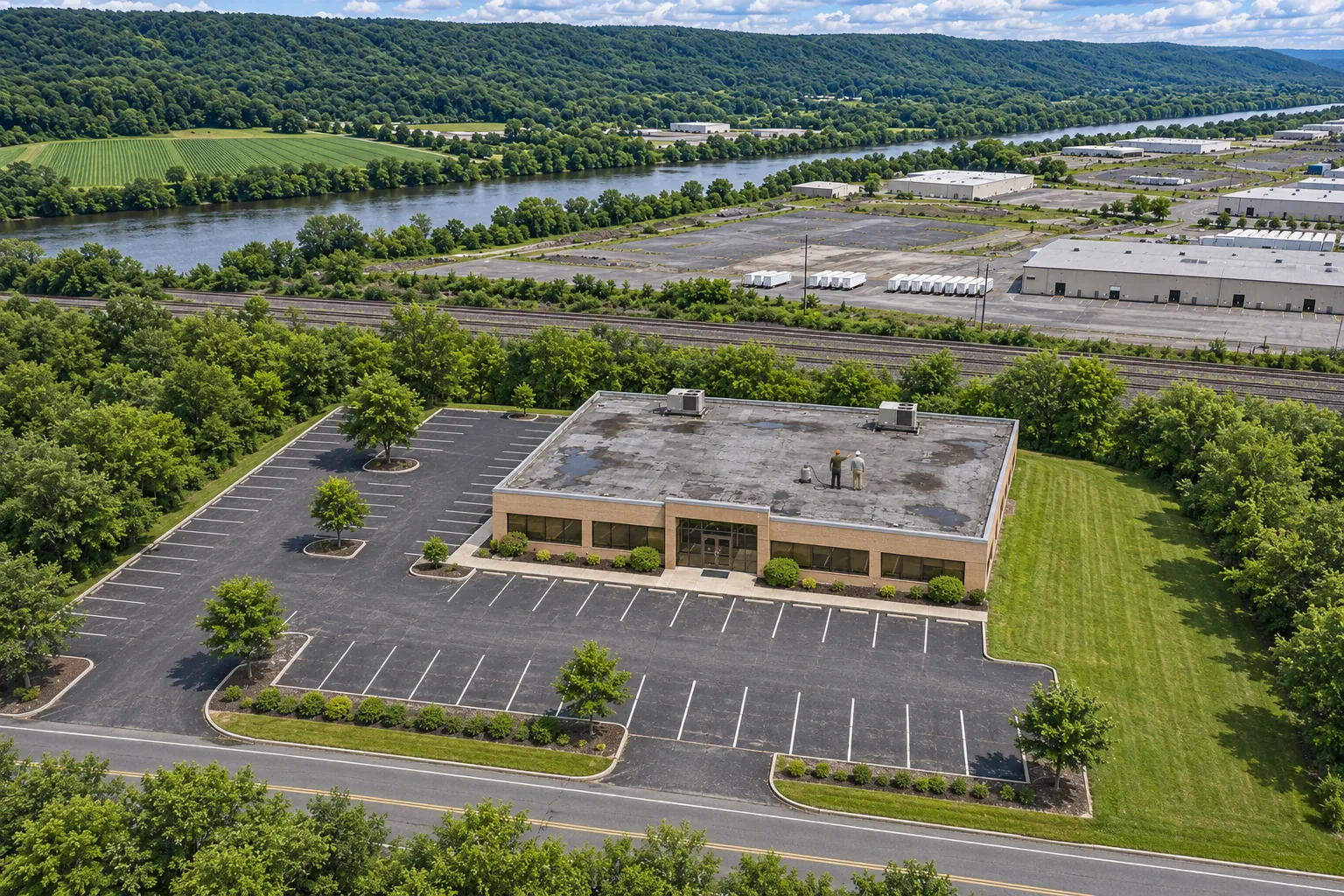
Pick the situation closest to your building today.
Water is coming in. Call with the address and where it drips.
Call UsFive steps take a repair from the first call to a dry ceiling. You see the scope before any material goes on the roof.
Starting at the stain or drip, we walk the roof above it and follow seams, drains, and penetrations uphill to where water gets under the cover.
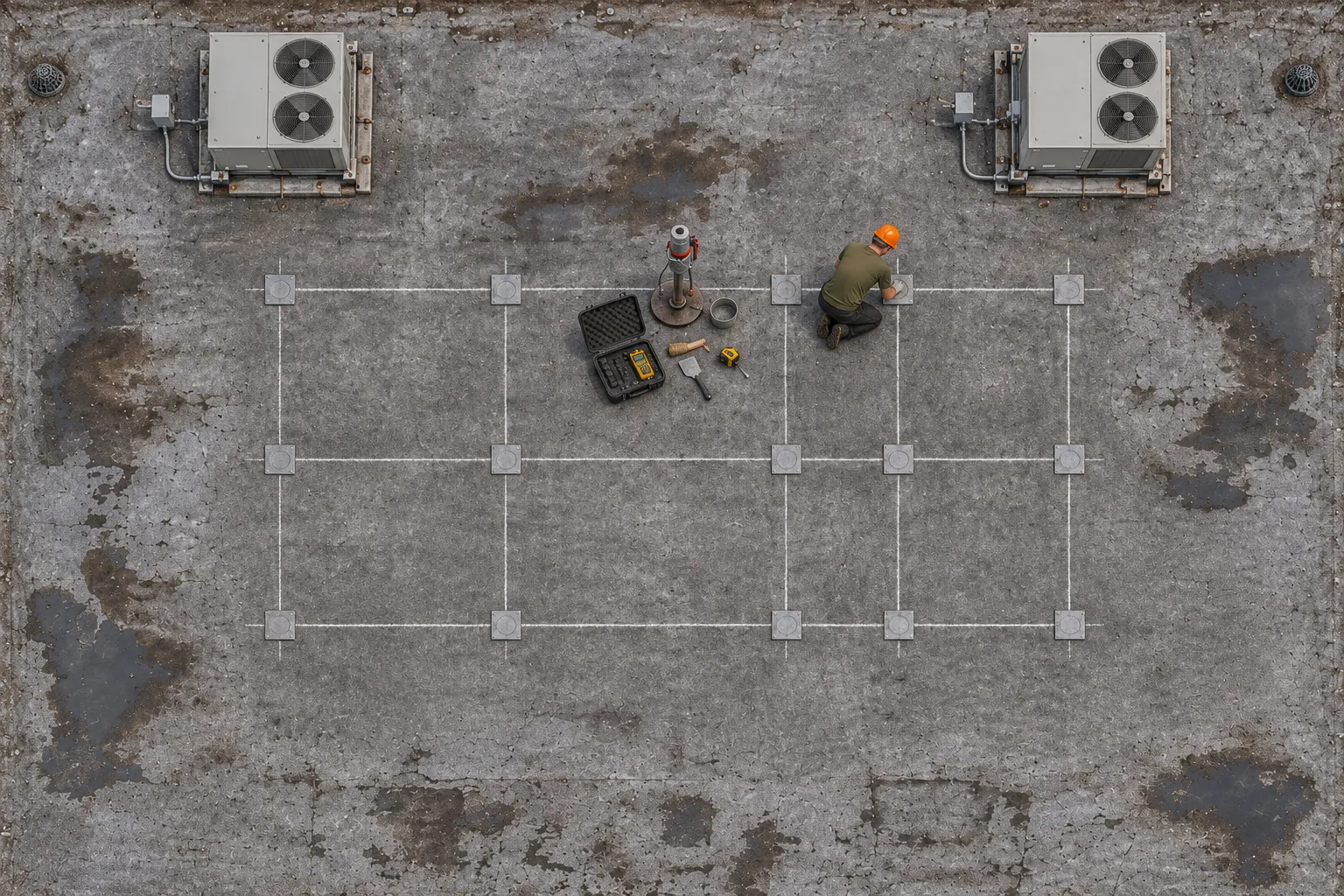
Core cuts and a moisture meter show how far wet insulation runs, since a dry-looking membrane can hide a soaked board below.
Photos and a written limit mark where repair ends and firm roofing begins, so the scope matches what the roof shows.
Matched materials go on: welded or adhered membrane patches, new metal panels, reset drain clamps, or rebuilt curb flashing.
After the work, a water test or the next rain confirms the fix, and the record notes what changed and where.
A repair that closes the real entry point helps three groups inside a commercial building.
We take commercial roof repair work in Bethlehem and the five towns below. Outside them? Please call us or send us a message.
Logistics warehouses, brick industrial buildings, and medical offices make up most of the flat and metal roof repairs we handle here.
Perkasie warehouse leaks often surface several supports away from the roof opening, so the drip gets mapped before any patch.
Glenolden drain leaks get checked at the membrane clamp and below the deck, where piping can share the blame.
Panel laps on Hatboro metal buildings are checked past the reported hole, since neighboring seams often share the same rust.
Rooftop units on Doylestown offices get compared with rain and run times, since condensate can mimic a roof leak.
Leased buildings in Ambler benefit from a tenant log of leak times and spots, which narrows the trace on the roof.
Short answers to what Bethlehem building owners ask most. The full list sits on the FAQ page.
Yes, when the bay or area under repair is surrounded by roofing that tests dry and holds together. We take core cuts and check the transitions into the next bays, because drains, curbs, and equipment often tie bays together.
The boundary comes from what the roof shows, rather than from the floor plan.
It ties what we see on the roof to the path water takes into the building. You get photos of each defect, notes on the surrounding materials, and a plain line on which findings support a repair and which need a closer look, especially when a ceiling stain sits away from the opening above.
The repair methods overlap, but the inspection sorts them out first. We look for fresh punctures, split laps, and moved flashing, then compare them with older patches and maintenance notes. The written scope describes what was found on each area of the roof and leaves the insurance question to you and your carrier.
Move people and sensitive equipment away from the water, close off the wet rooms, and catch the drip. Then call us with where the water shows up, what the weather did, and whether any rooftop equipment was serviced recently.
Containment buys time; the trace and the permanent repair follow once the roof is safe to walk.
Heavy-rain leaks still point to a defect, often at an outlet that backs up, a flashing that sits too low, or a wall detail that only takes water in wind. We match storm timing to drains, scuppers, and nearby walls so the repair follows the real water path.
Documentation gives you facts to bring to the insurer, and the policy and cause of damage decide the rest. We photograph the roof, list the repair work, and separate storm effects from older deterioration wherever the evidence allows, so nothing gets lumped into one assumed claim.
Send the address and a few lines about the leak or damage, or call. We set up the inspection and walk you through the findings.