Owner
- Only the wet bays get repaired, and dry bays stay in service.
- Core results show where soaked insulation ends under the membrane.
- Commercial roof repair for Perkasie businesses comes with photos of each bay.

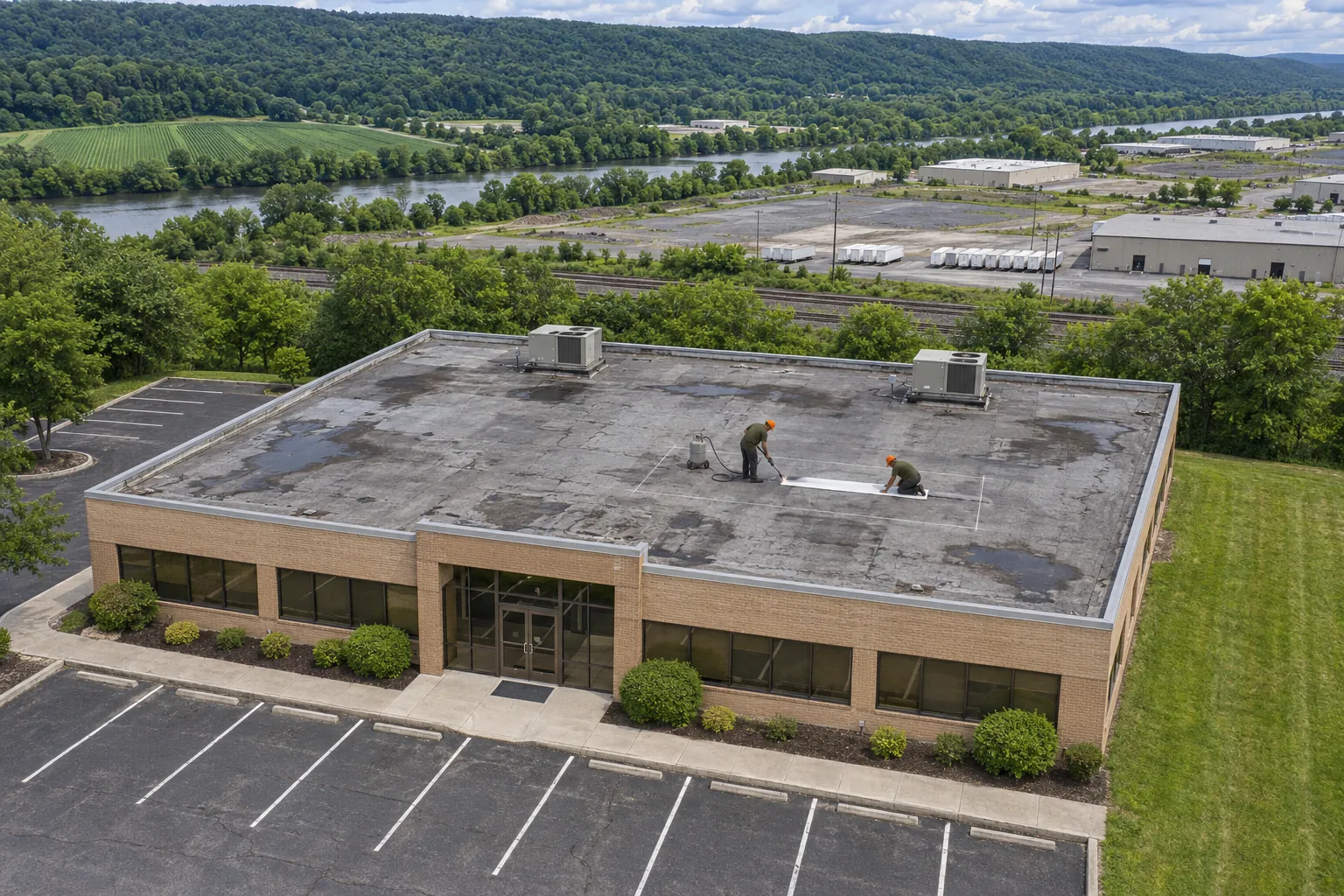
As a Perkasie commercial roof repair contractor, we trace warehouse leaks that travel past several supports, then repair the entry and every wet bay it reached.
Perkasie commercial roof repair on warehouses starts with one fact: the drip on the floor is rarely under the hole in the roof.
Water that gets under a warehouse membrane often rides the deck flutes, a purlin, or the top of the insulation for several bays before it finds a fastener hole or seam to fall through. We map the reported drip against seams, drains, and penetrations upslope of it.
Once the entry is found, core cuts show which bays the water crossed, and each wet bay goes into the repair scope.
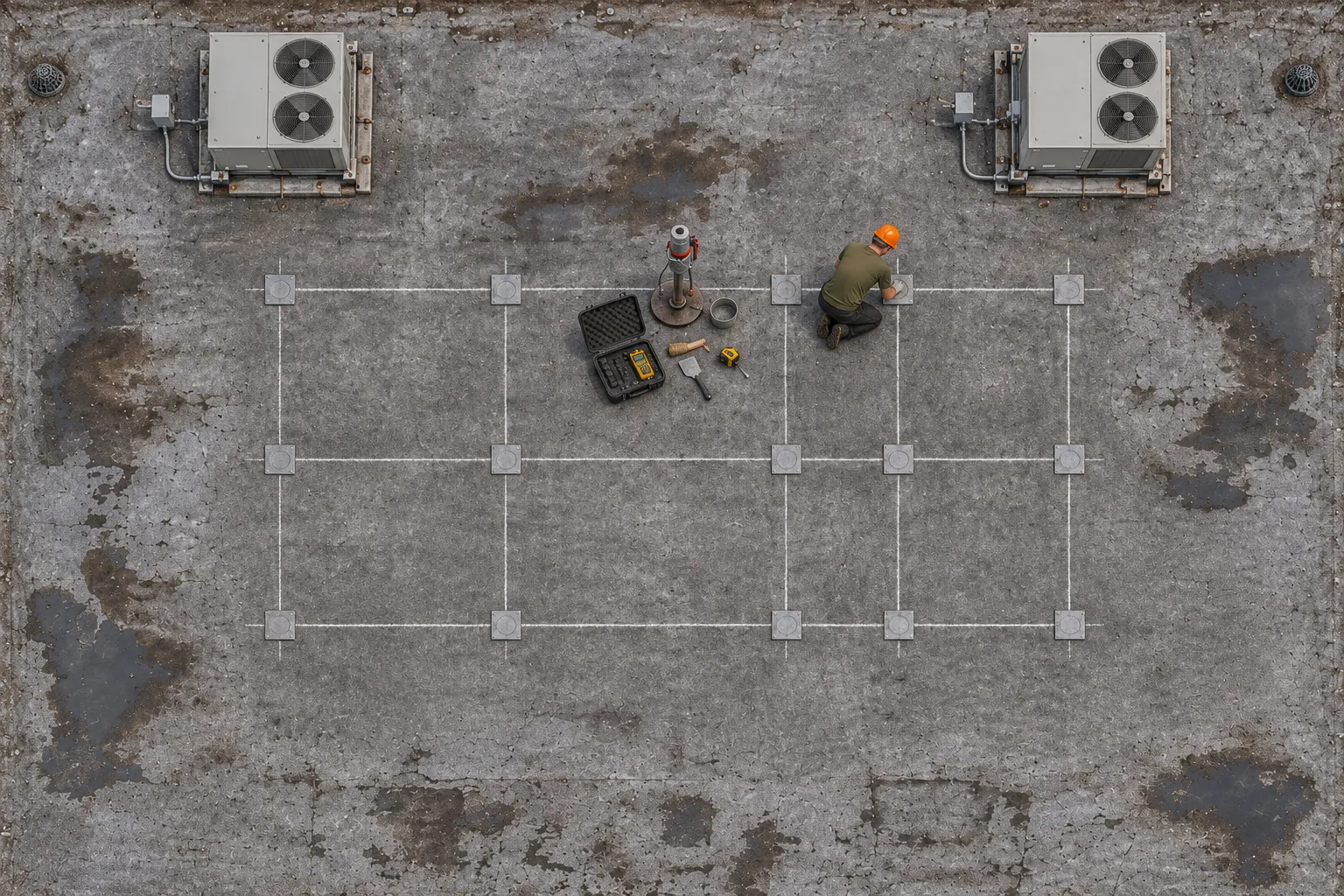
Warehouse roofs in Perkasie show these signs before and during leaks.
Product under a drip needs moving first; the trace then follows the water back uphill on the roof.
Warehouse membranes have hundreds of feet of laps, and one opened section can feed several bays.
Wide bays with few outlets hold water in the middle, where the membrane ages fastest.
Leaks by the docks often start at the wall flashing above the doors rather than in the field.
Deck screws that back out under the membrane raise small bumps that wear through under foot traffic.
Warehouses run on dry floors and open aisles, so a traced repair helps every shift.
Warehouse repairs here usually combine a few of these methods.
Opened laps get cleaned and rewelded, or covered with a strip matched to the membrane.
Soaked insulation along the water path is cut out and replaced before the roof is closed.
Drains sitting high get reset so the middle of the bay drains instead of ponding.
Flashing over dock doors gets reterminated so wall water stays outside the building.
Core results across the bays decide how much of a warehouse roof the repair covers.
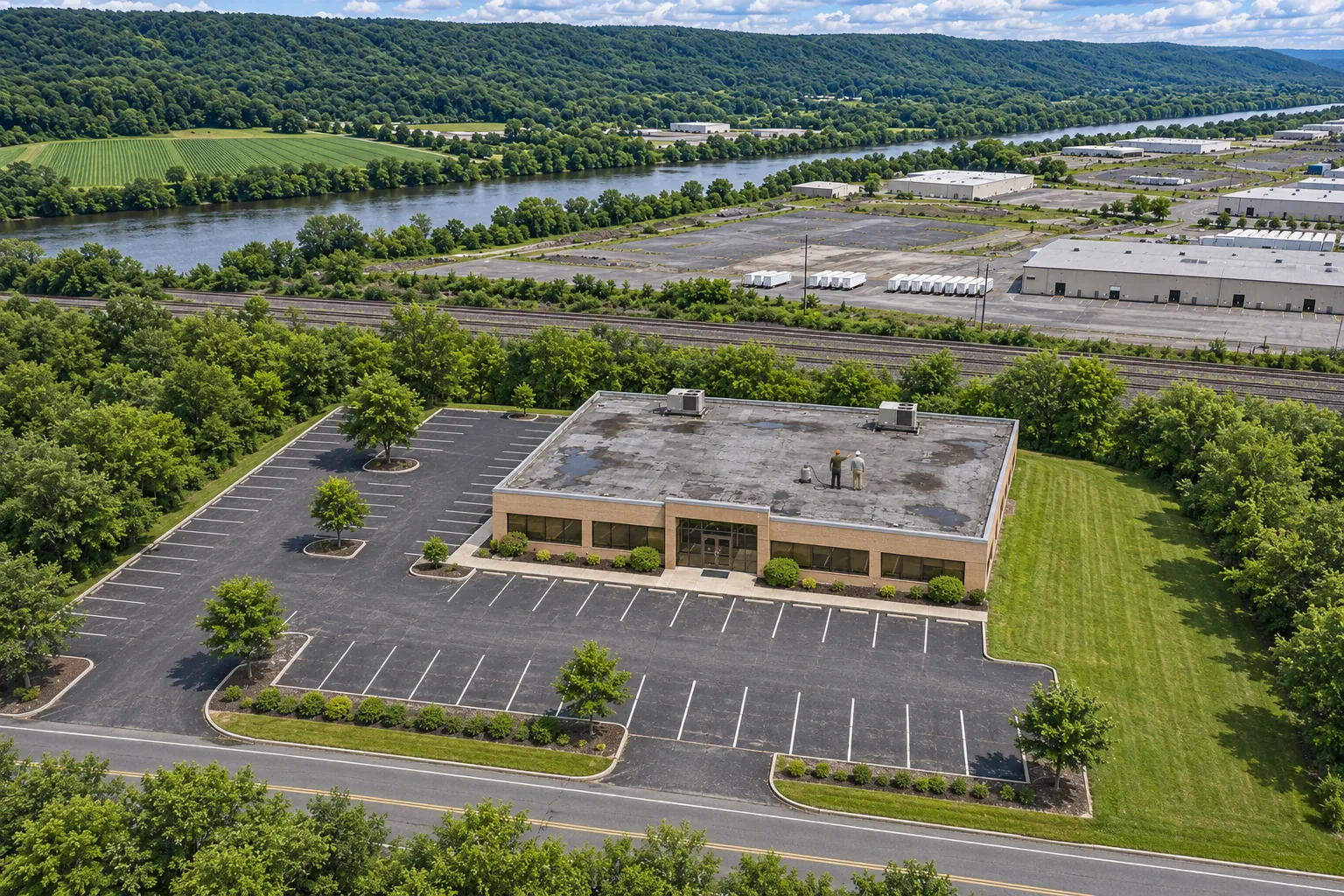
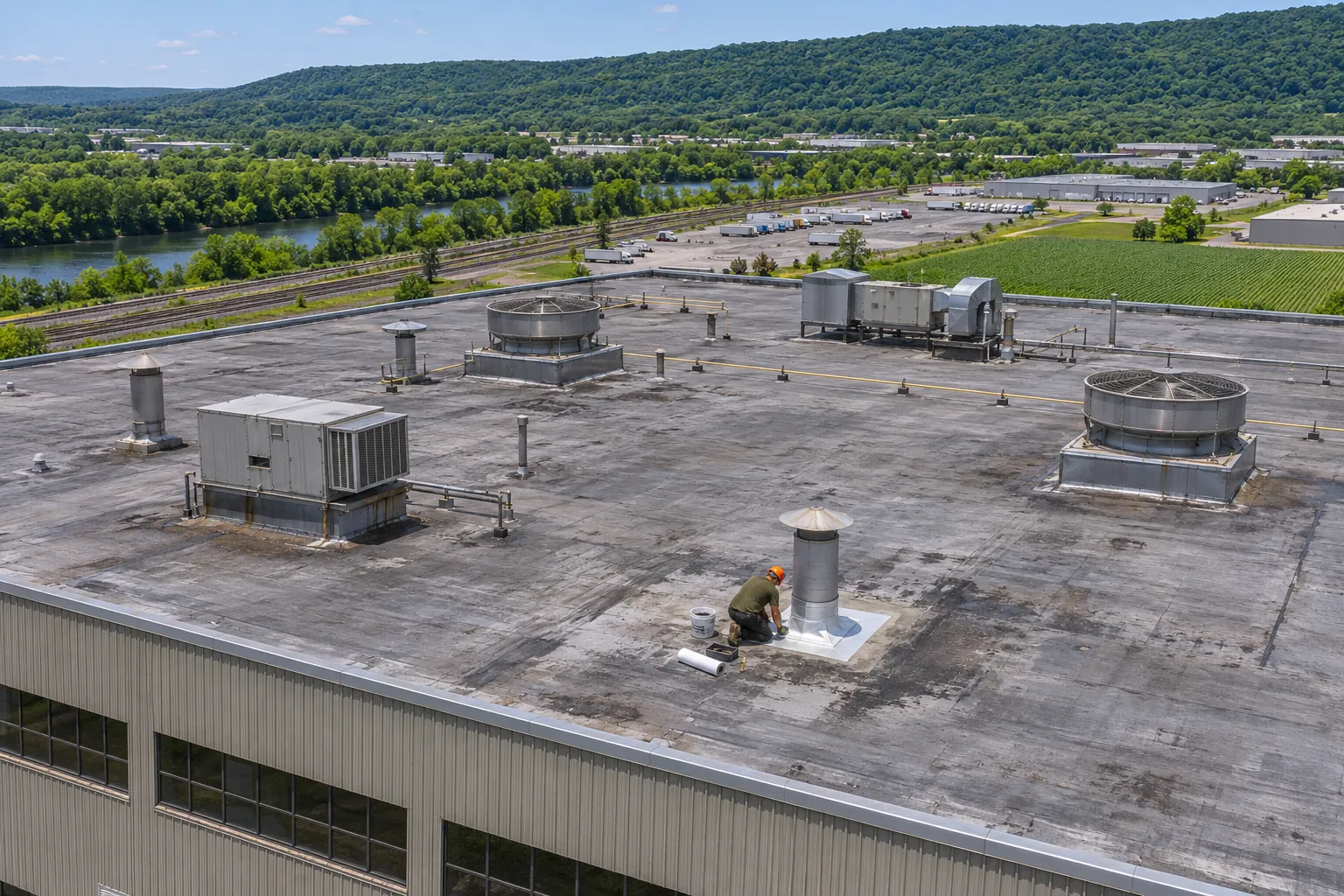
Four steps take a warehouse leak from the floor back to the roof.
Floor spots and the racking they hit get photographed and located against column lines.
Up top, laps, drains, and penetrations upslope of the drip get checked bay by bay.
Cores along the path show which bays hold wet board and which stayed dry.
The entry gets repaired and the wet bays rebuilt, with edges on dry roof.
The next storm confirms each repaired bay stays dry, and the result goes into the warehouse roof record.
Beyond Perkasie, we take commercial roof repair calls in the towns below. Somewhere else? Please call us or send us a message.
Drain leaks checked at the roof clamp and the piping below.
Metal shop laps and fasteners repaired out to solid panel.
Office roof leaks separated from rooftop unit condensate.
Tenant leak logs that speed up tracing on leased buildings.
Yes. Water often runs along the deck, a purlin, or the insulation before it drips. We map the drip against the seams, drains, and penetrations above it and follow the likely path rather than looking straight up. The repair closes the entry and covers every material the water soaked.
The inspection does. Cost follows the time spent tracing, the roof system, how many areas need work and how large they are, how much wet insulation the cores find, and any drain or flashing work. Access to the roof matters too.
Yes. We repair commercial roofs of every size in Perkasie, from single-bay shops to large warehouses. Call with the address and what the roof is doing.
Often. When cores show dry roof around a bay, the repair can stop at its edges. Bays tied together by a shared drain or curb sometimes get repaired together.
Move stock out from under the drip, catch the water, and note when it drips and how fast. Photos of the floor and ceiling help us line up the trace on the roof.
Most single-bay repairs fit inside a few working days once materials are on hand and the weather is dry. Larger rebuilds take longer and get planned around dock schedules so trucks keep moving through the doors that stay open.
Where technicians cross the roof to units or drains every week, pads protect the membrane along that route. We mark worn paths during the inspection and list pads in the scope where traffic has already scuffed the sheet.
Tell us which bay is wet and where the drip lands, and we will trace it on the roof.