Owner
- New panels go in only where the old steel has failed.
- Commercial roof repair for Hatboro businesses ends on solid metal at each lap.
- Photos of each lap show the condition of the roof around the repair.
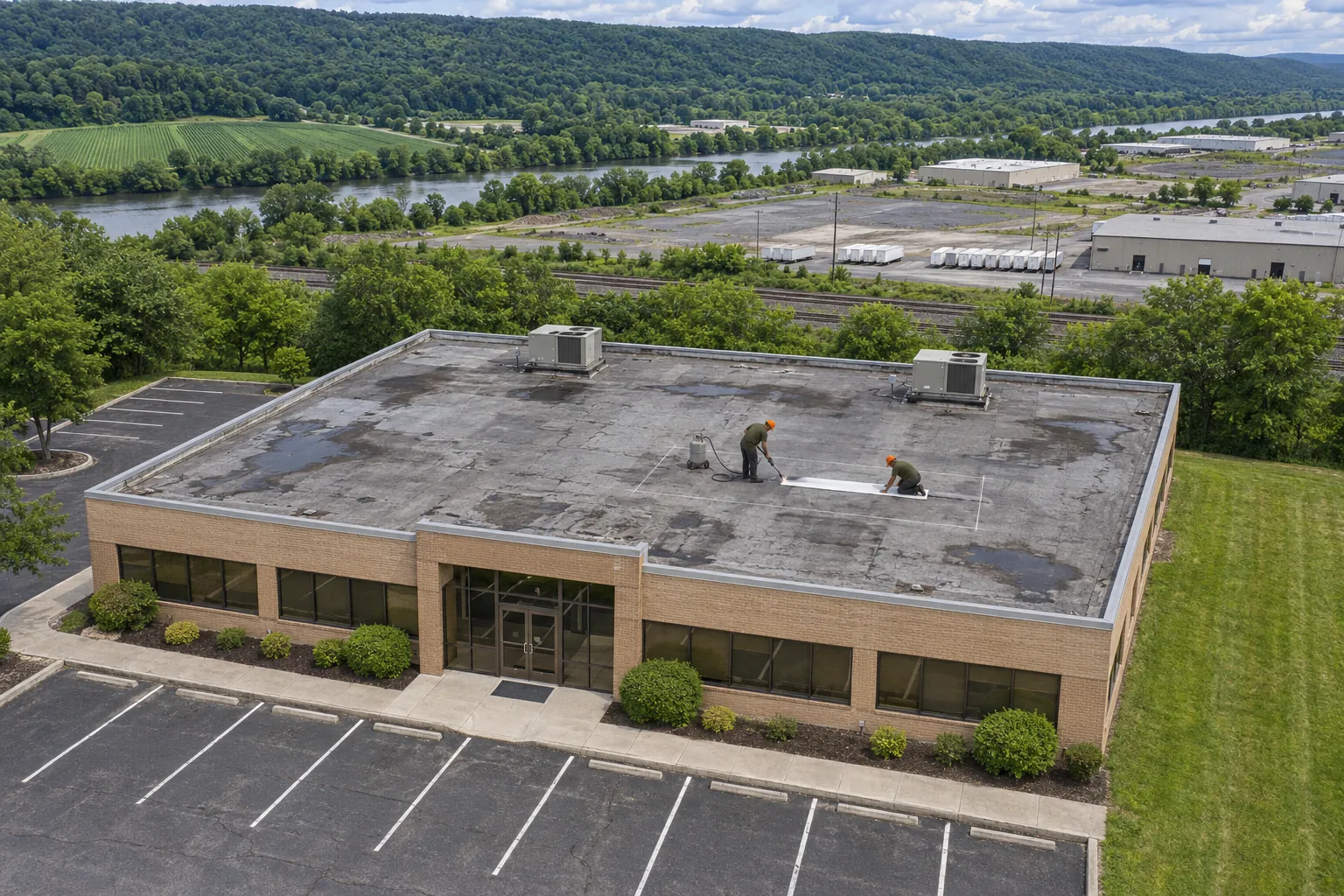
As a Hatboro commercial roof repair contractor, we repair metal shop and storage roofs, checking the laps beside each leak so the repair ends on solid metal.
Hatboro commercial roof repair on metal roofs turns on one question: where does solid metal start again past the leak?
A leak at one lap on a metal roof usually has company. The seams on either side carry the same movement and often the same rust, so we check their fastening and the steel itself before deciding where the repair stops.
New sheets and sealed laps get tied into serviceable metal, so the next weak seam over does not become the next leak a few feet away.
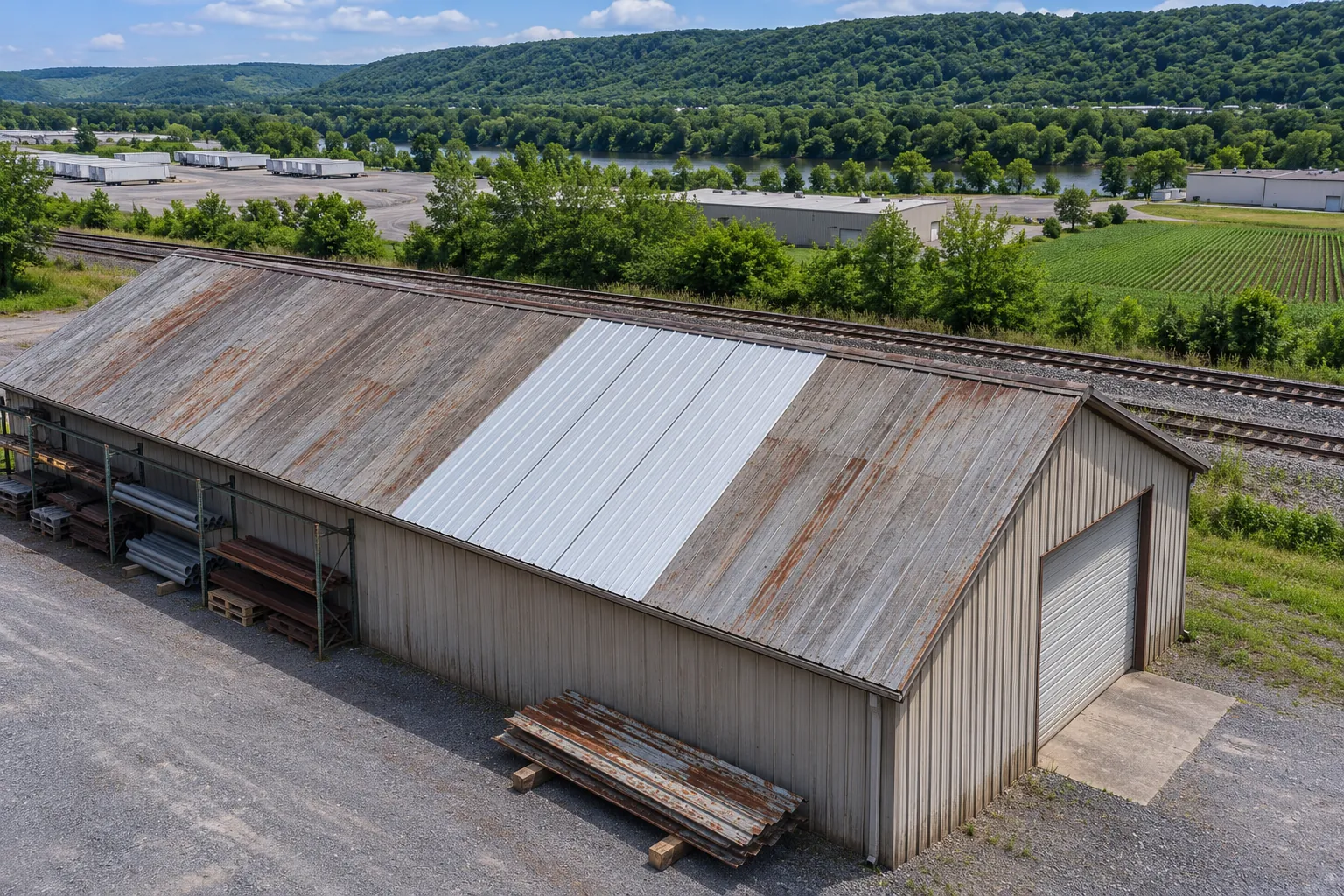
Metal shops and storage buildings in Hatboro show wear at these spots.
Orange staining that runs downslope from a lap means moisture is working inside the overlap.
Washers that have split or flattened stop sealing, and the hole under them takes water.
Eave ends hold water and snow longest, so panels often rust through there before anywhere else.
Water dripping on tools or stored goods means an open hole, and the trace starts at the nearest lap.
Snow that melts and refreezes at the eave pushes water back under the lowest panel ends and trim.
Metal buildings hold equipment and stock, so a repair that lasts helps everyone using them.
Each metal roof repair here matches the panel profile already on the building.
Rusted-through sheets get swapped for panels matching the rib profile and gauge.
Overlaps get cleaned, sealed with butyl tape, and stitched closed at the right spacing.
Worn holes get larger screws with new washers so they seal again.
Eave trim and gutter edges get refitted where rust or ice pulled them loose.
Rust depth and fastener grip decide whether a lap gets sealed or a sheet gets swapped.
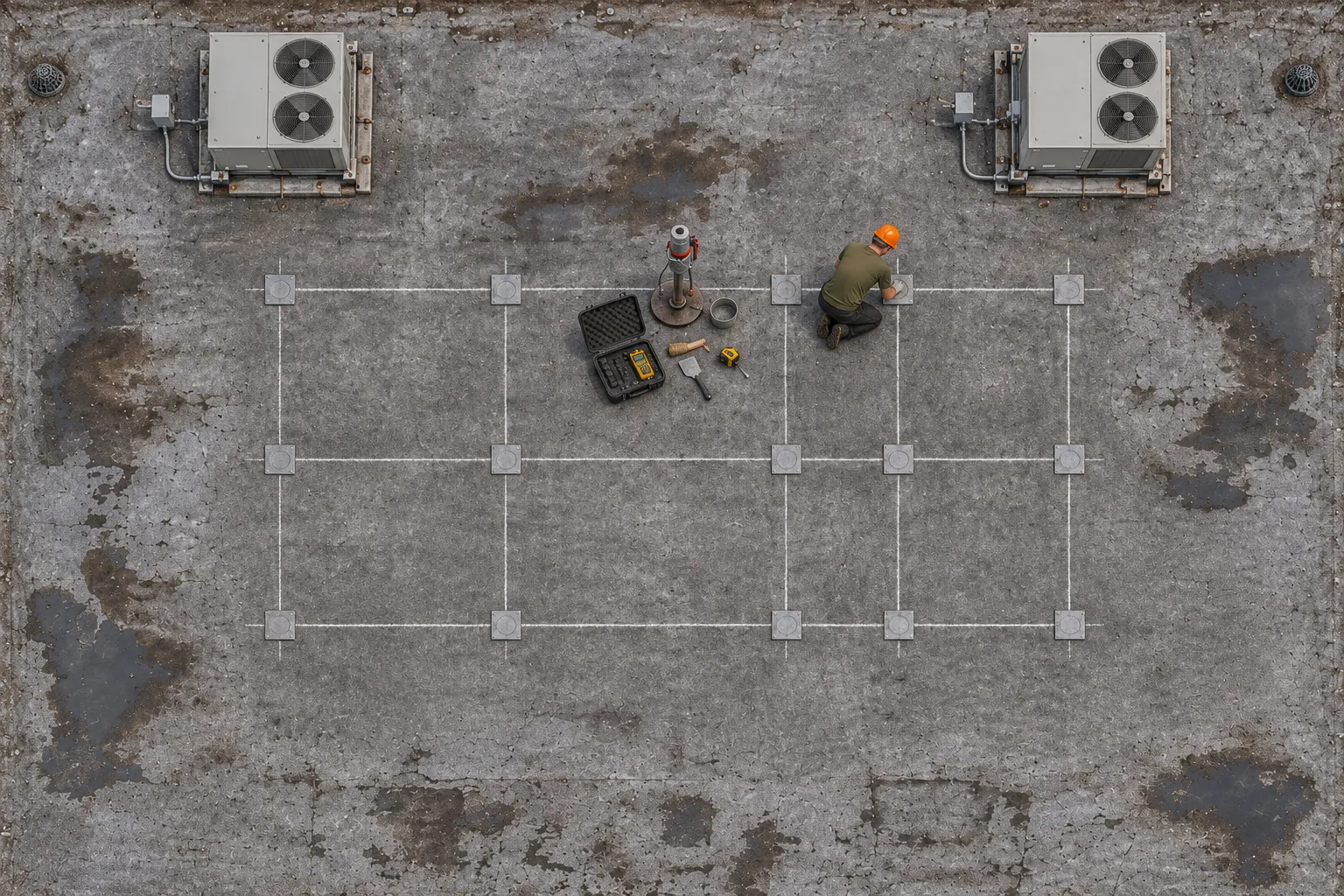
Four steps take a metal roof from a leaking lap to a sealed one.
The lap or hole above the drip gets inspected, along with its fasteners.
Seams on both sides get checked for rust and loose screws before the boundary is set.
Failed sheets come out, and new ones lap into solid metal with fresh sealant.
Repaired laps get water-tested, and photos go into your file.
Photos record the rust and fastener condition around each repair, so the next decision on the roof starts from facts.
We also repair commercial roofs in the towns listed here. Elsewhere? Feel free to call us or send us a message.
Office roof leaks separated from rooftop unit condensate.
Tenant leak logs that speed up tracing on leased buildings.
Because the laps next to the leak share its movement and often its rust. We look at their condition and fastening before setting the boundary, so the new detail connects to metal that will hold. Skipping the next weak seam leaves another entry route right beside the repair.
Yes. Metal shops and storage buildings are a large share of our Hatboro work. Call with the address and a description of the leak.
We repair older metal roofs in and around Hatboro. Older panels get a closer look at rust depth and fastener grip before we choose between repair and new sheets.
We measure the rib spacing, height, and gauge of the existing sheets and order panels to match, so the laps nest and seal properly.
Older or discontinued profiles sometimes need a custom-formed sheet, which we confirm before removing anything.
Water that wicks into the overlap stays there after the surface dries. Over several winters it thins the steel from inside the lap, out of sight.
Sealing the lap stops new water getting in, and sheets thinned past repair get replaced.
Coating questions belong to a different service, and the repair comes first either way. Loose fasteners, open laps, and rusted-through sheets get fixed before anything goes over the panels, so the roof is tight on its own.
Yes. Cracked or yellowed skylight panels get replaced with panels matching the rib profile, and their laps get sealed and fastened like the steel sheets around them.
Every lap, fastener row, and flashing within reach of the leak, plus the eaves, gutters, and any skylight panels. We note rust depth, loose screws, and bent trim on photos, then mark which sheets take a repair and which need replacing, so the scope matches the steel you have.
Describe the leak and the building, and we will inspect the panels and laps around it.