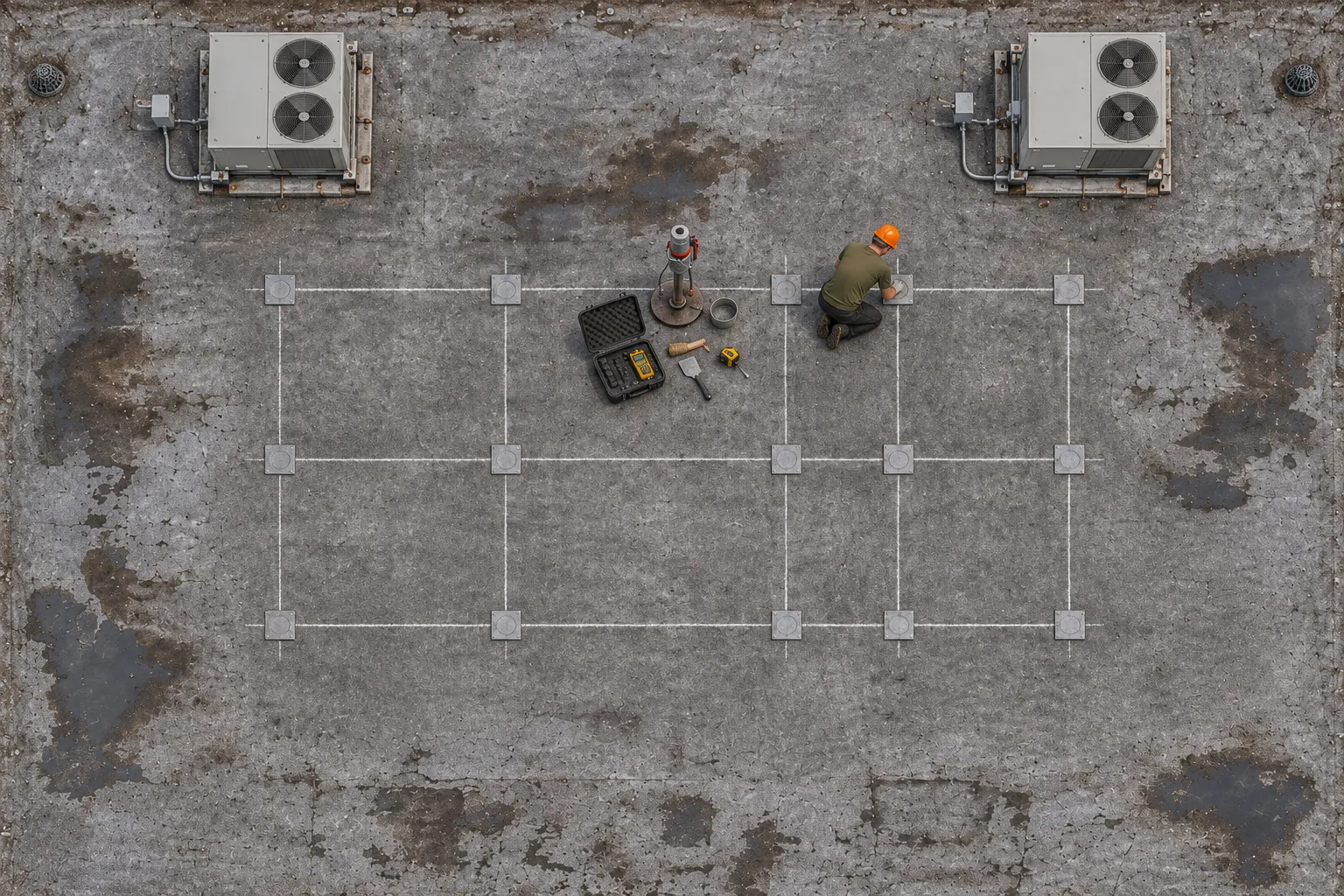
Patch And Reflash
- Membrane
- Bonds cleanly past the split
- Insulation
- Dry to the touch and by meter
- Old Patches
- Few, still well bonded
- Drainage
- Water reaches the drain
- Repair
- Matched patch, reset flashing
As a Bethlehem flat roof repair contractor, we fix split seams, blisters, worn patches, and leaking drains on membrane and built-up commercial roofs.
Bethlehem flat roof repair on a warehouse often comes down to one choice: patch the failed area, or rebuild the wet section around it.
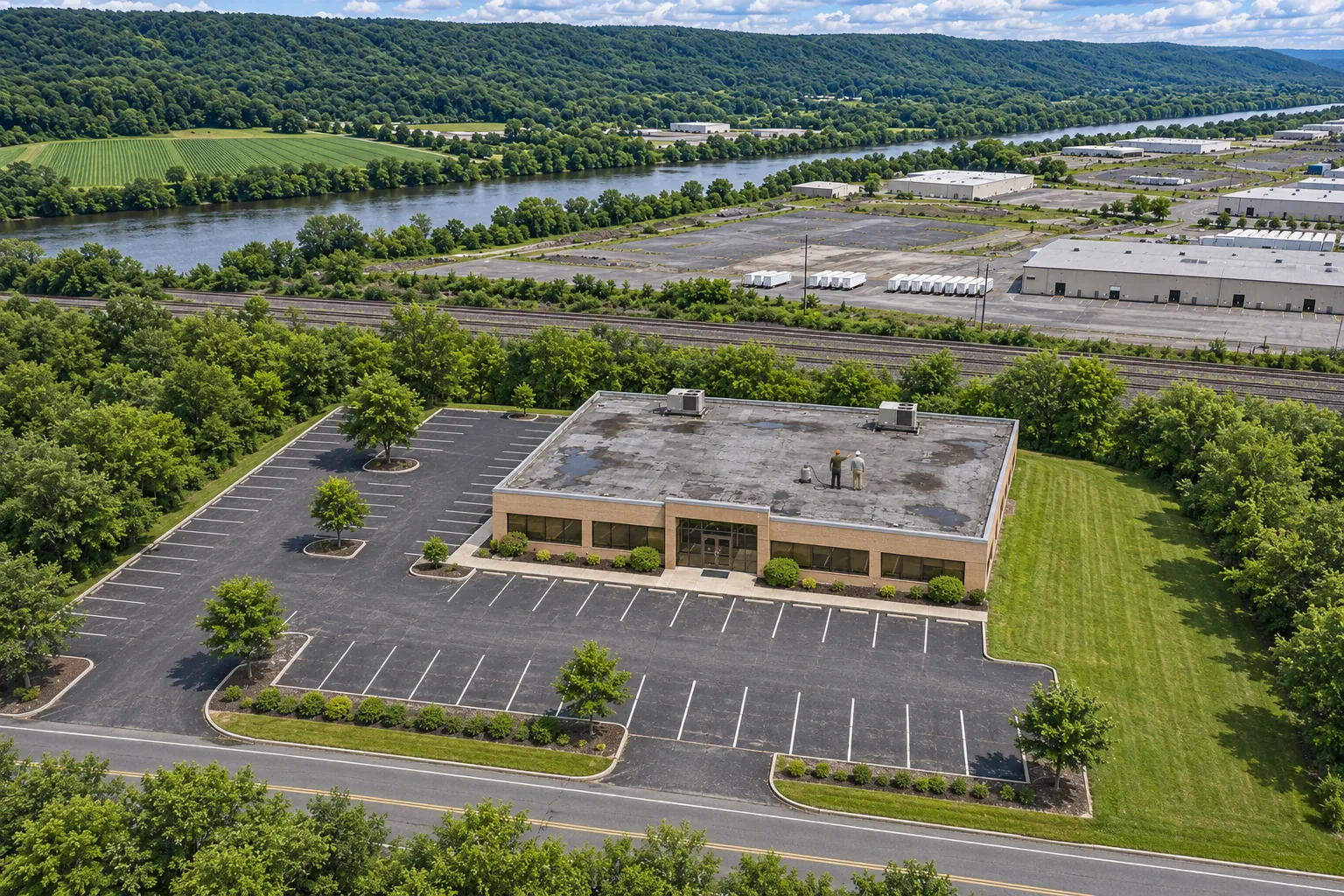
Low-slope roofs show trouble at seams, drains, and raised spots first.
Cold snaps shrink the membrane and pull at welded or taped laps until a gap opens along the seam line.
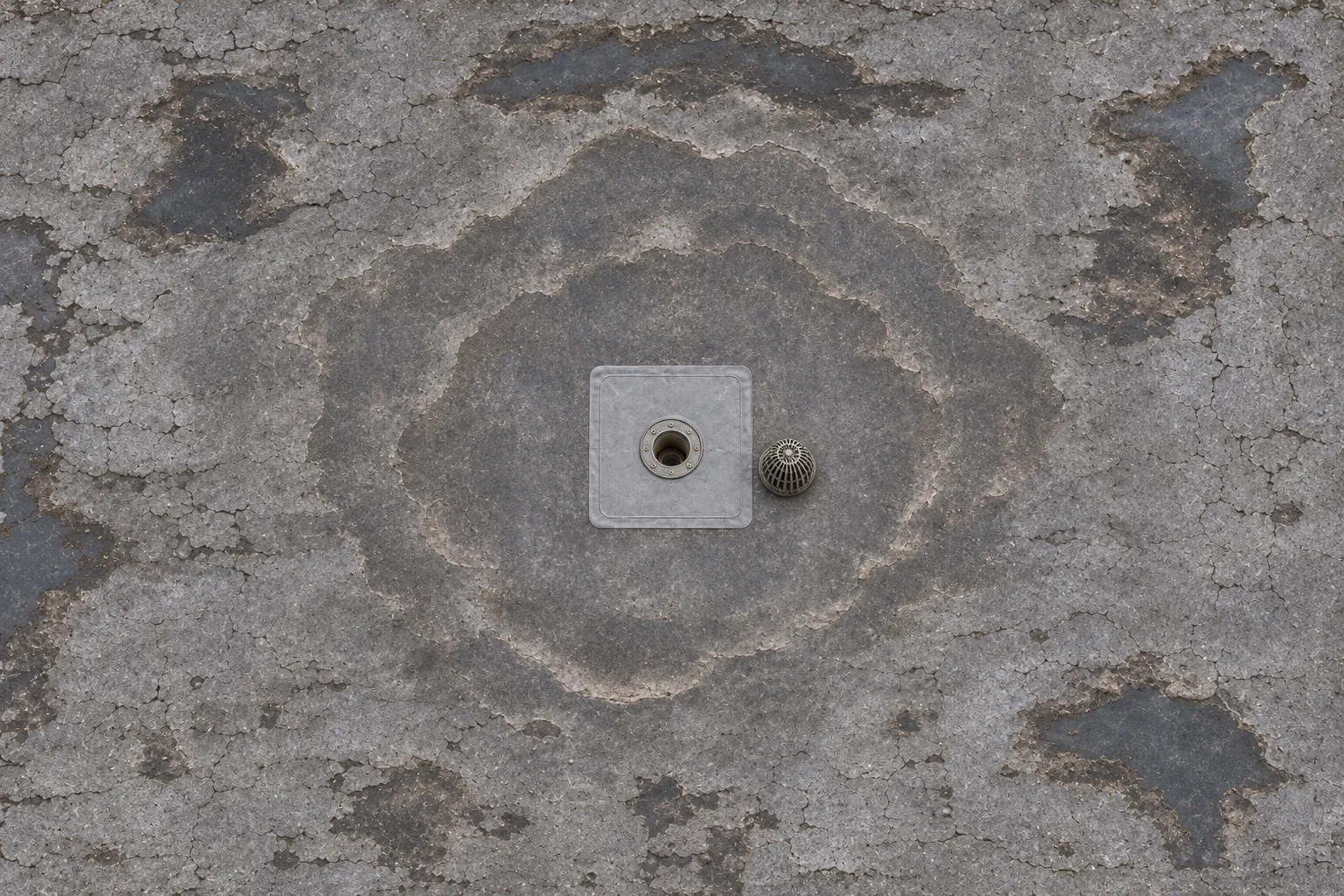
Dirt rings that circle an outlet show water sitting there after storms, usually from a raised clamp or a low spot.
Raised bubbles mean layers have separated; a closed, firm blister often waits for assessment, while a split one needs work.
Earlier patches set on dirty or wet membrane lose their grip and start lifting at the corners first.
Water through the ceiling means the membrane has an opening, and wet insulation around it keeps feeding the drip.
The best way to repair a flat roof depends on the membrane in place, so each method below matches a roof system.
Single-ply sheets get a cleaned, primed surface and a new patch welded over the split, then probed along every edge.
Rubber roofs take a seam primer and pressure-sensitive tape, with a cover strip where the lap failed.
Built-up and modified roofs have blistered or cracked plies cut back and rebuilt in matching layers.
Leaking outlets get the clamp ring pulled, new flashing set in sealant, and the strainer reinstalled.
Where cores show soaked board, that board is replaced before the membrane over it is closed.
A dry, well-drained membrane pays off for everyone in the building.
Five steps take a low-slope roof from leaking to dry and documented.
Seams, drains, and patches around the reported leak get photographed and probed before any cut is made.
Small cores show whether the insulation under the field is dry, and how far any wet area reaches.
Chalk lines on the membrane mark where the repair ends, always out on dry, well-bonded roof.
Matched membrane goes on a clean, dry surface, with flashing reset at any drain or curb involved.
Drains and patches get checked after the next storm, and the record notes the result.
Some flat roof jobs lead into these related repairs.
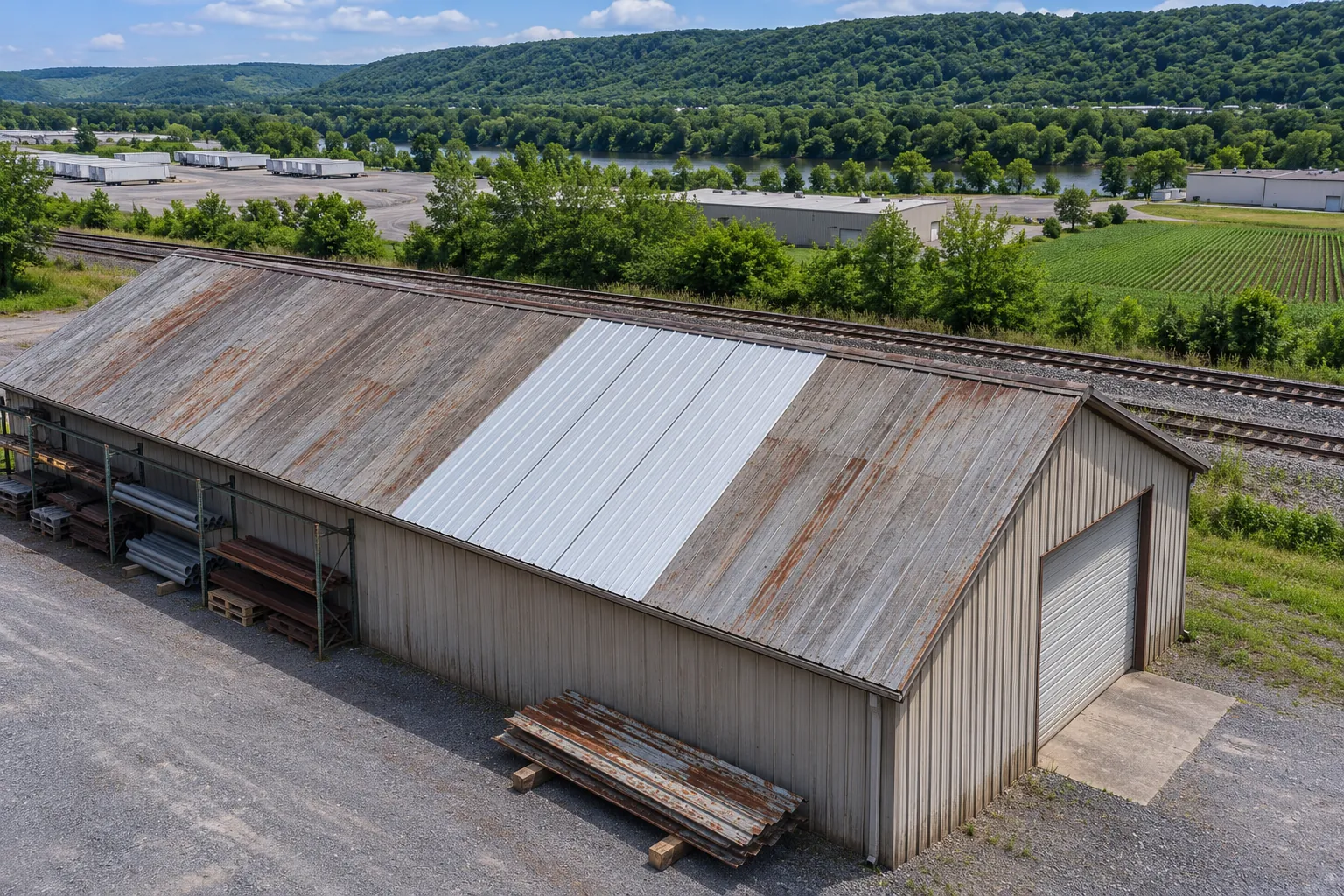
Panels, laps, fasteners, and curb flashing on metal roofs.
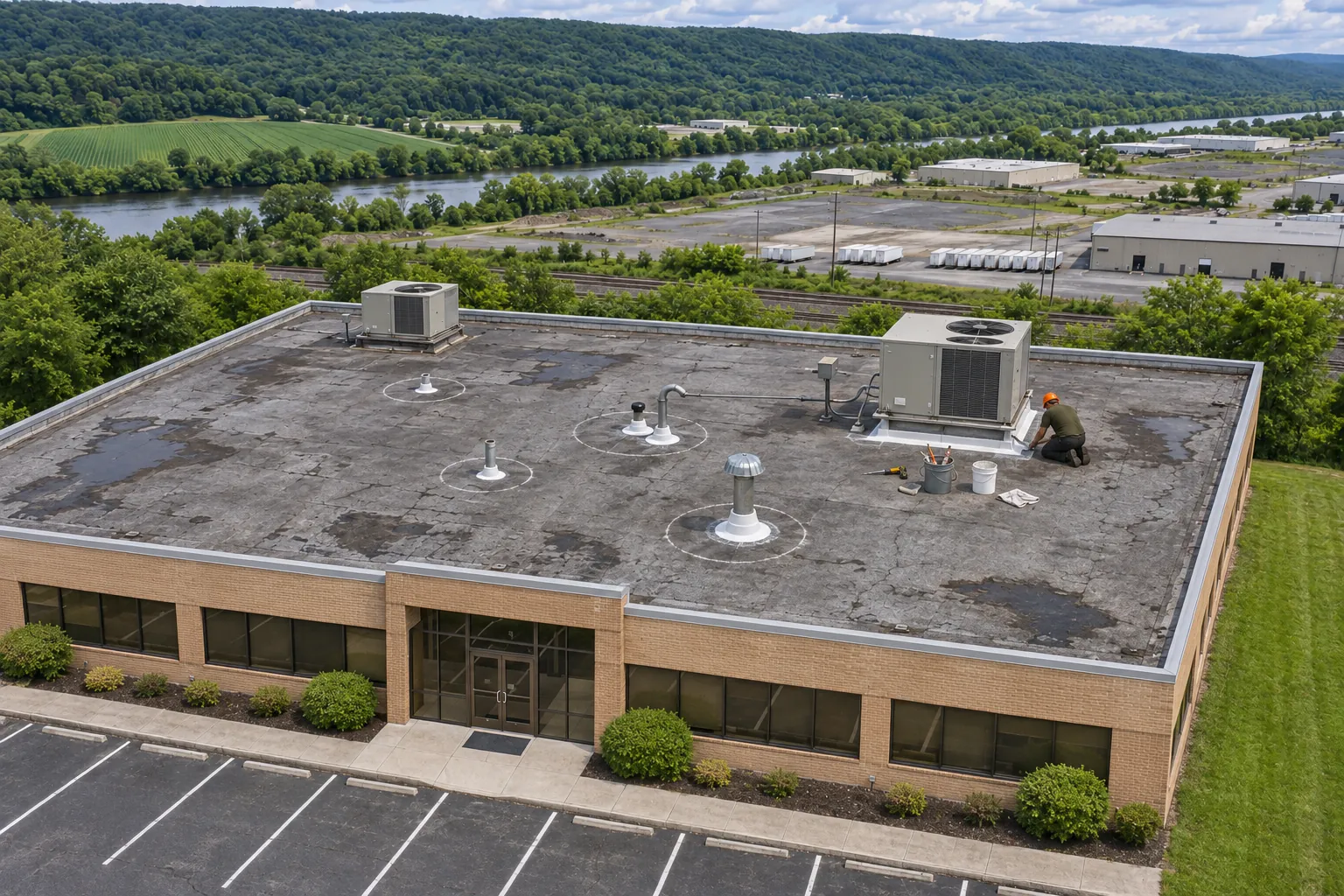
Drips with an unknown source, traced back to the entry.
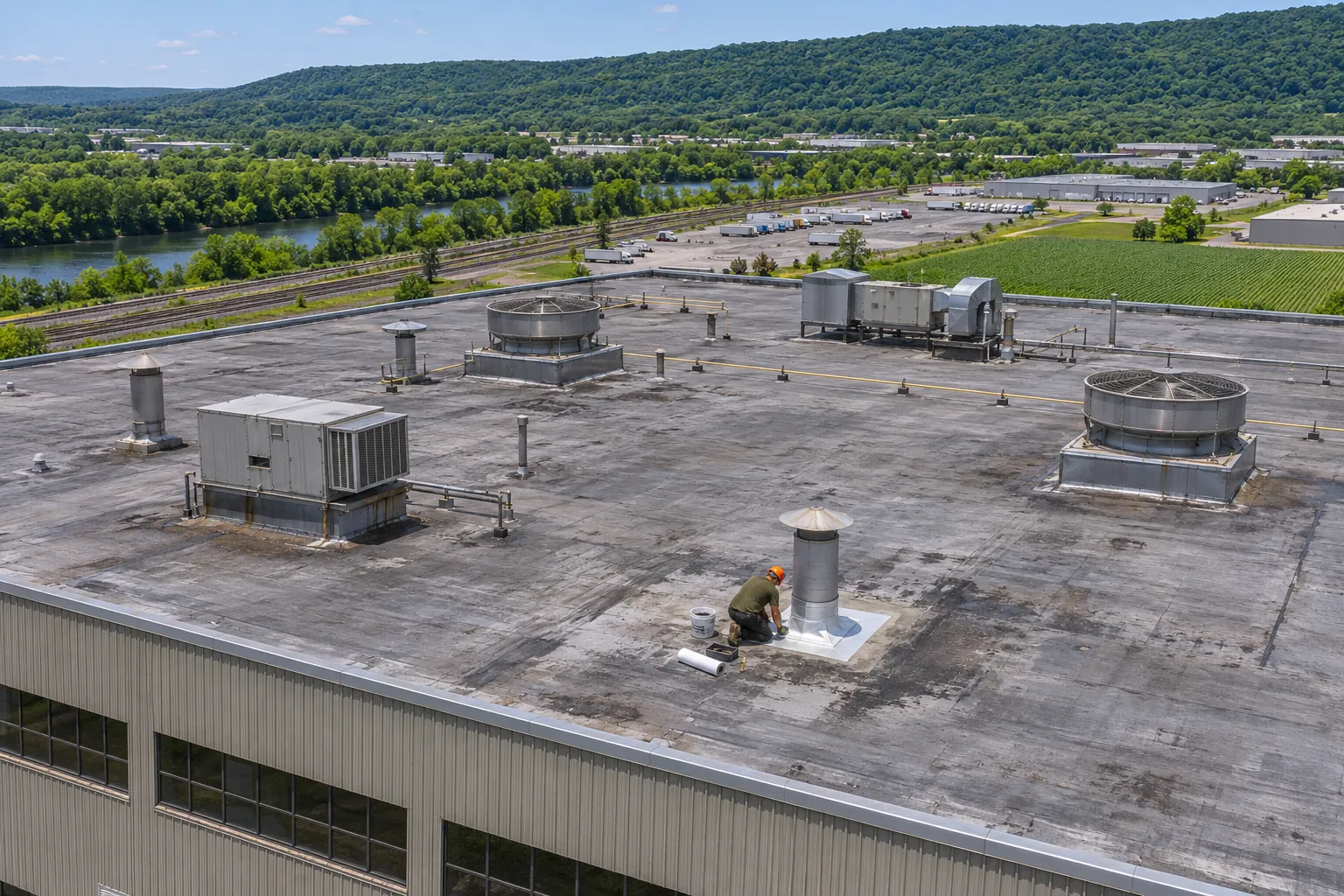
Stacks, drains, and phased work over running production.
Price comes from the inspection on the roof. Tracing the source, the membrane type, how many damaged areas there are and how big, wet insulation found in core cuts, flashing and drain work, and roof access all feed into it, along with whether a section needs rebuilding instead of a patch.
Match the repair to the membrane already there and to the condition of the area around it. We check earlier patches, how dry the surface is, and how well the field membrane holds before choosing a weld, a tape repair, or rebuilt plies. A patch that only covers the hole has to bond and stay compatible too.
A closed, firm blister usually waits for an assessment. We check whether it has split, whether people walk on it, and whether moisture or separated layers sit underneath. Cutting it open without a matched repair ready can turn a raised spot into a new leak.
Sometimes. Ice, unsafe access, or temperatures below the material limits can rule out a permanent repair. We check surface dryness and the bonding or curing time first.
When conditions fall short, a temporary seal holds until spring, and the open part of the scope stays on the list.
We identify the membrane by sample or by its seams and edges, then choose material that bonds to it. TPO takes a welded TPO patch, EPDM takes primed tape and EPDM cover strip, and built-up roofs take matching plies.
A raised clamp ring, old flashing built up around the outlet, or a settled deck can leave the drain higher than the roof around it. We check each one and reset the drain so water reaches it.
Yes. Cracked or blistered plies get cut back to firm material and rebuilt in matching layers, with the surfacing restored on top so the repaired area weathers like the roof around it.
Tell us which room is wet or where water sits on the roof, and we will set up the inspection.