Owner
- Repairs go to the actual source, whether roof or mechanical.
- Curb flashing gets rebuilt once, rather than patched after each service visit.
- Doylestown commercial roof repair cost stays tied to confirmed roofing faults.

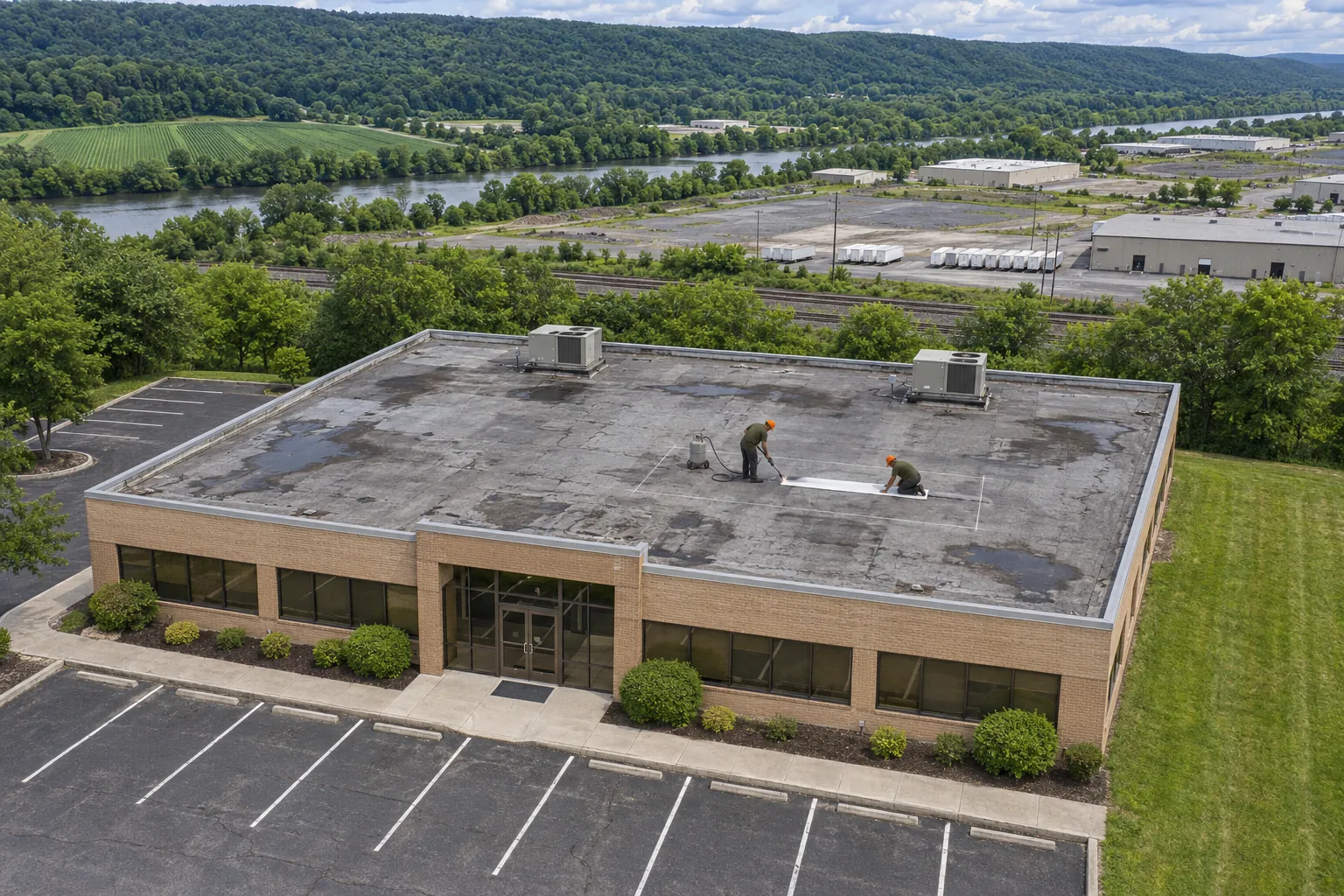
As a Doylestown commercial roof repair contractor, we sort roof leaks from rooftop equipment water on office buildings, then repair the curb, seam, or flashing at fault.
Doylestown commercial roof repair on offices starts by asking whether the water is rain or equipment water.
Office roofs carry units, curbs, ducts, and condensate lines, and every one of them can drip into a ceiling. We compare when the water shows up with rain and with unit run times, then look at curb flashing and service panels.
When the source looks mechanical, the HVAC technician checks the unit first, and the roof repair covers only the roofing faults we confirm.
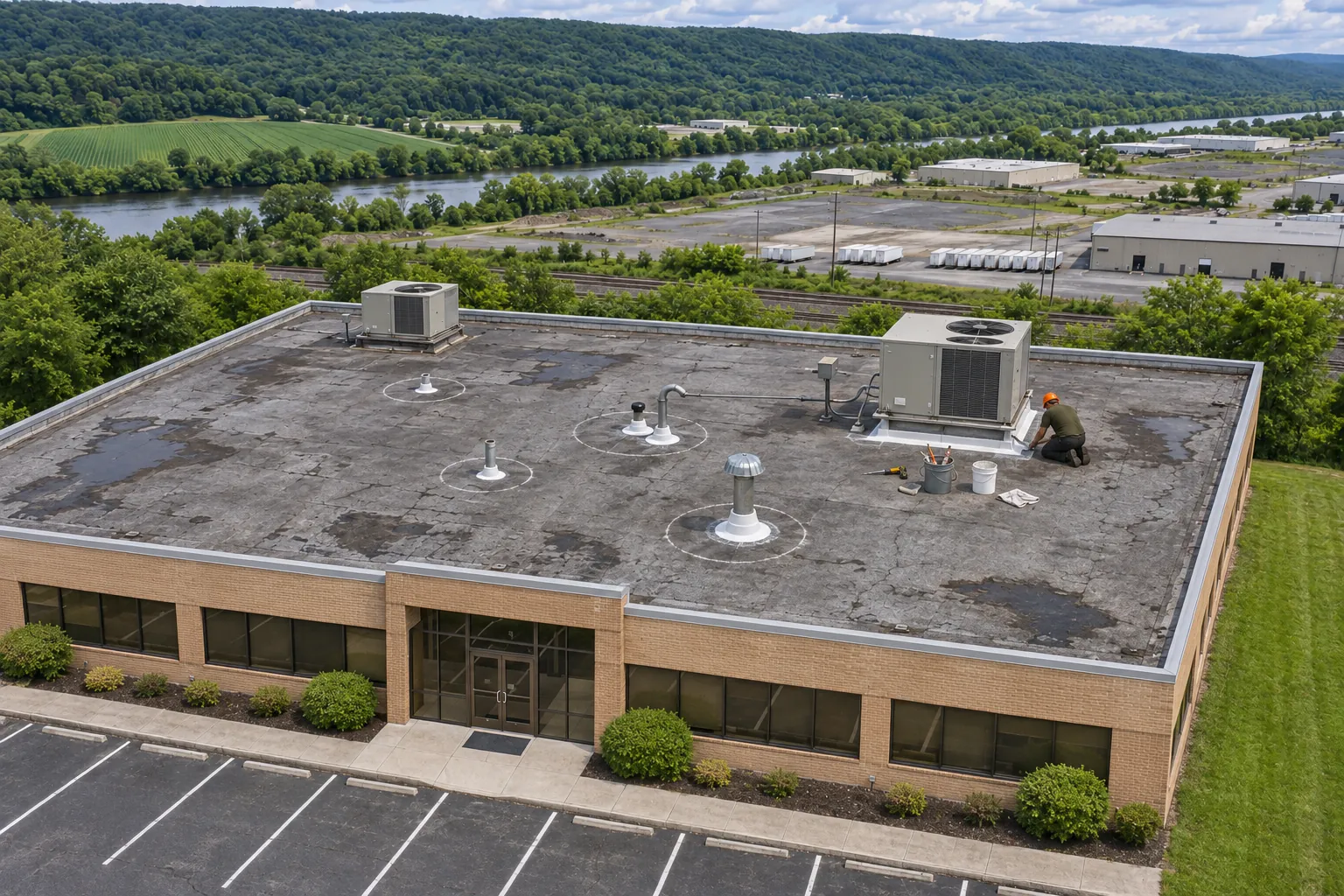
Office buildings in Doylestown show these signs near their equipment.
Flashing that pulled away from a unit curb lets runoff under the membrane on the uphill side.
Water that shows up in clear weather points to condensate or piping, which the HVAC trade checks.
Panels left loose after service let rain into the unit, where it drains out through the curb.
Occupied offices under a drip need containment first, then a trace at the unit and roof above.
Technician traffic wears the membrane between the hatch and each unit, thinning it over time.
Sorting roof water from unit water sends the right trade the first time.
These repairs cover the roofing side of office equipment leaks.
Membrane flashing gets run up the curb and terminated under the unit flange.
Pipe boots and pitch pans around refrigerant and gas lines get replaced and sealed.
Worn service routes get patched and covered with walkway pads.
Laps beside curbs that flex with the unit get rewelded or covered.
Timing and location tell roof water apart from water coming out of a rooftop unit.
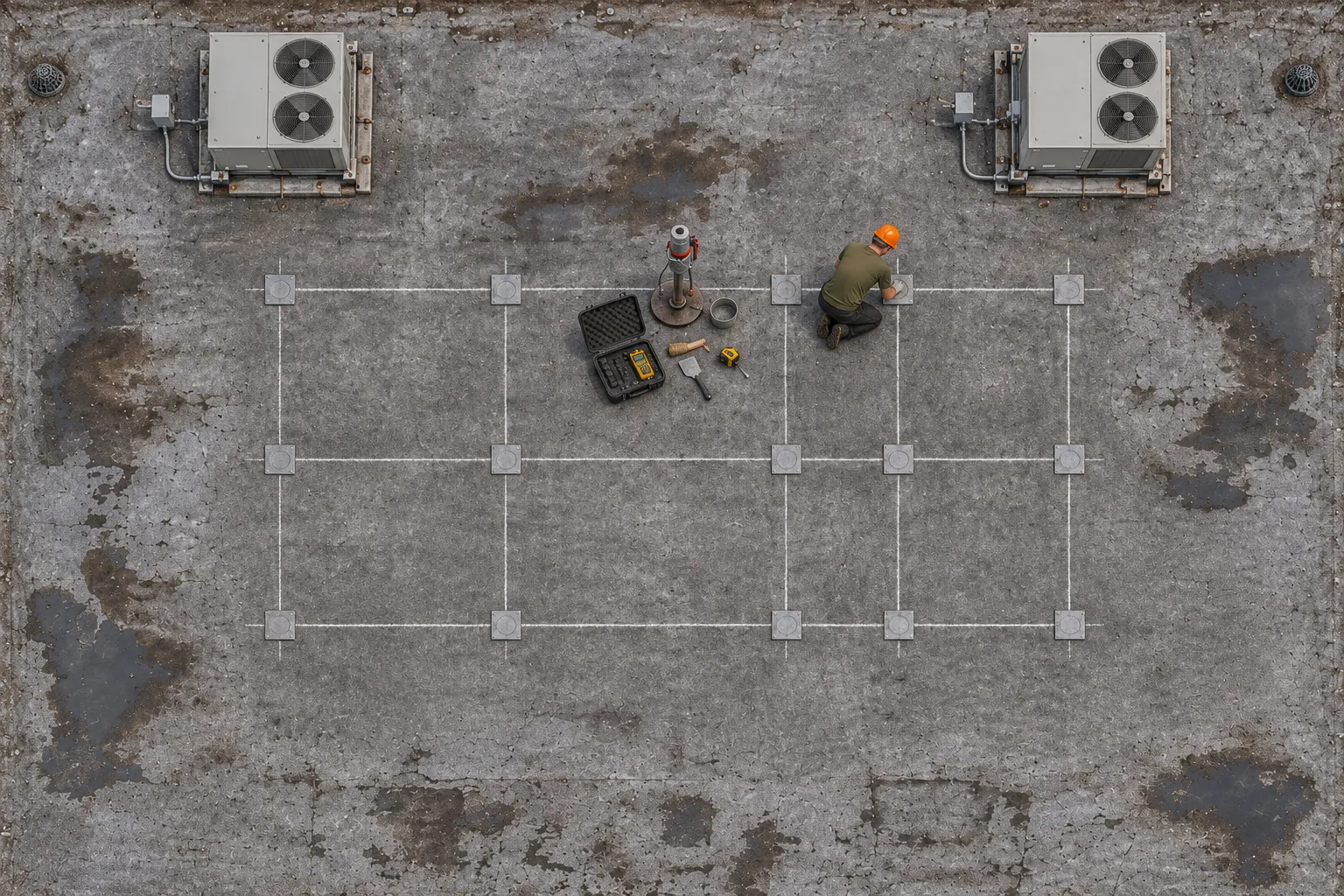
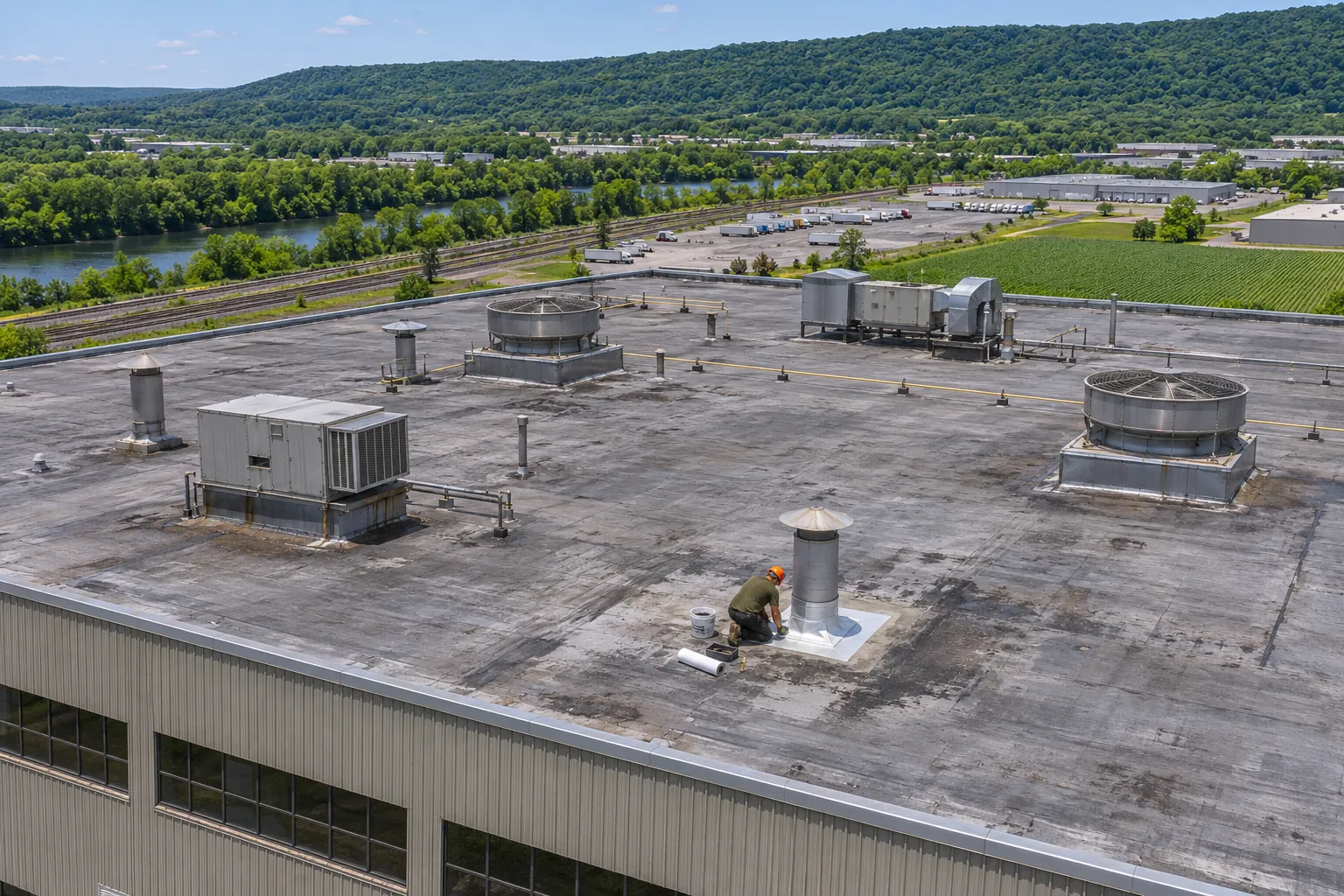
Four steps separate equipment water from roof water and fix each.
Leak times get compared with rainfall and the unit run schedule.
Curb flashing, pipe boots, and the panels on the unit get checked.
Mechanical water goes to the HVAC technician; roofing faults go on our scope.
Roofing fixes get made and checked through the next rain and unit cycle.
Roof and HVAC findings go into one record, so the next leak call starts from what was already ruled out.
These towns are part of our service area too. Building somewhere else? Go ahead and call us or send us a message.
It can. Condensate, unit components, and open service panels all drip like roof leaks. We compare when the water shows up with unit operation and rain, then check curb flashing and service openings. The HVAC technician often needs to rule out mechanical sources before a roofing repair is chosen.
Yes. We repair office and office park roofs throughout Doylestown. Call with the building address and which rooms show water.
Yes. We share roof findings and photos with your HVAC company so each trade fixes its part of the leak.
When their technician finds a unit fault, we hold the curb flashing work until the unit side is fixed, so neither repair disturbs the other.
The inspection sets it: the source trace, the roof system, how many curbs and penetrations need work, any wet insulation, and access to the roof.
That points to condensate or a drain line inside the unit or curb. We confirm the roofing around it is tight and hand the unit findings to the HVAC technician.
A roof leak tends to follow rain instead, which is why the timing record matters.
It helps when the leak lines up with unit run times. Otherwise we inspect the roof first and share photos of the unit and curb with your HVAC company so they can check their side.
Pads along the routes technicians walk protect the membrane from boots, tools, and dropped parts. We patch any worn spots first and then set the pads so they stay clear of drains.
A new unit often sits on the old curb, and the flashing gets disturbed during the swap. We check the curb height, the membrane run up its sides, and the counterflashing under the new unit flange, then rebuild any part that no longer sheds water.
Tell us which rooms get wet and which units sit above them, and we will inspect the roof.