Repair The Panel
- Metal Around Hole
- Firm, full thickness
- Fastening
- Screws still bite
- Next Seam
- Lap tight and dry
- Rust
- Surface only
- Repair
- Patch, sealant, refasten
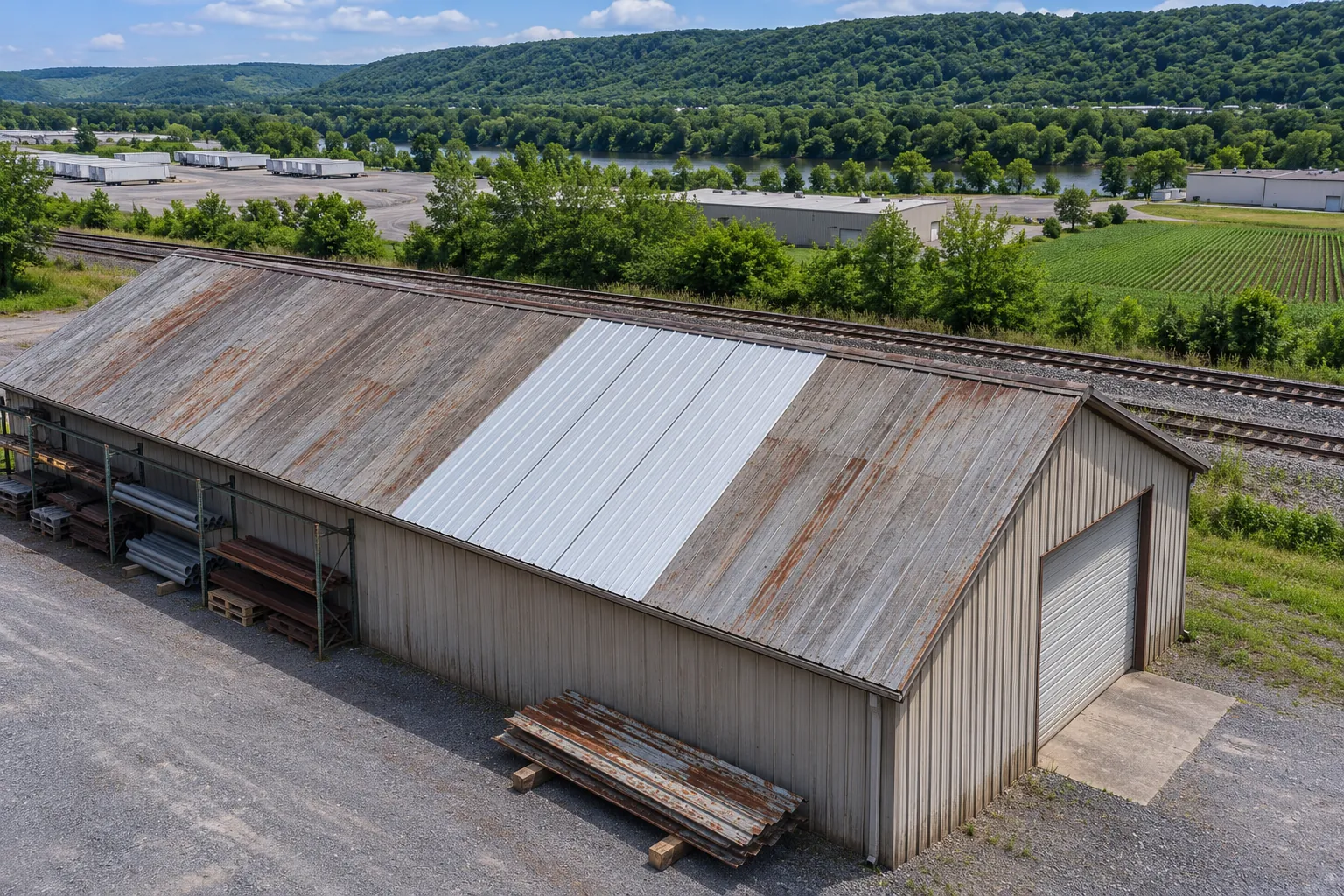
As a Bethlehem commercial metal roof repair contractor, we replace rusted panels, refasten laps, and rebuild curb flashing on metal shops, warehouses, and storage buildings.
Bethlehem commercial metal roof repair starts by deciding whether a damaged panel can take a repair or needs to come out and be replaced.
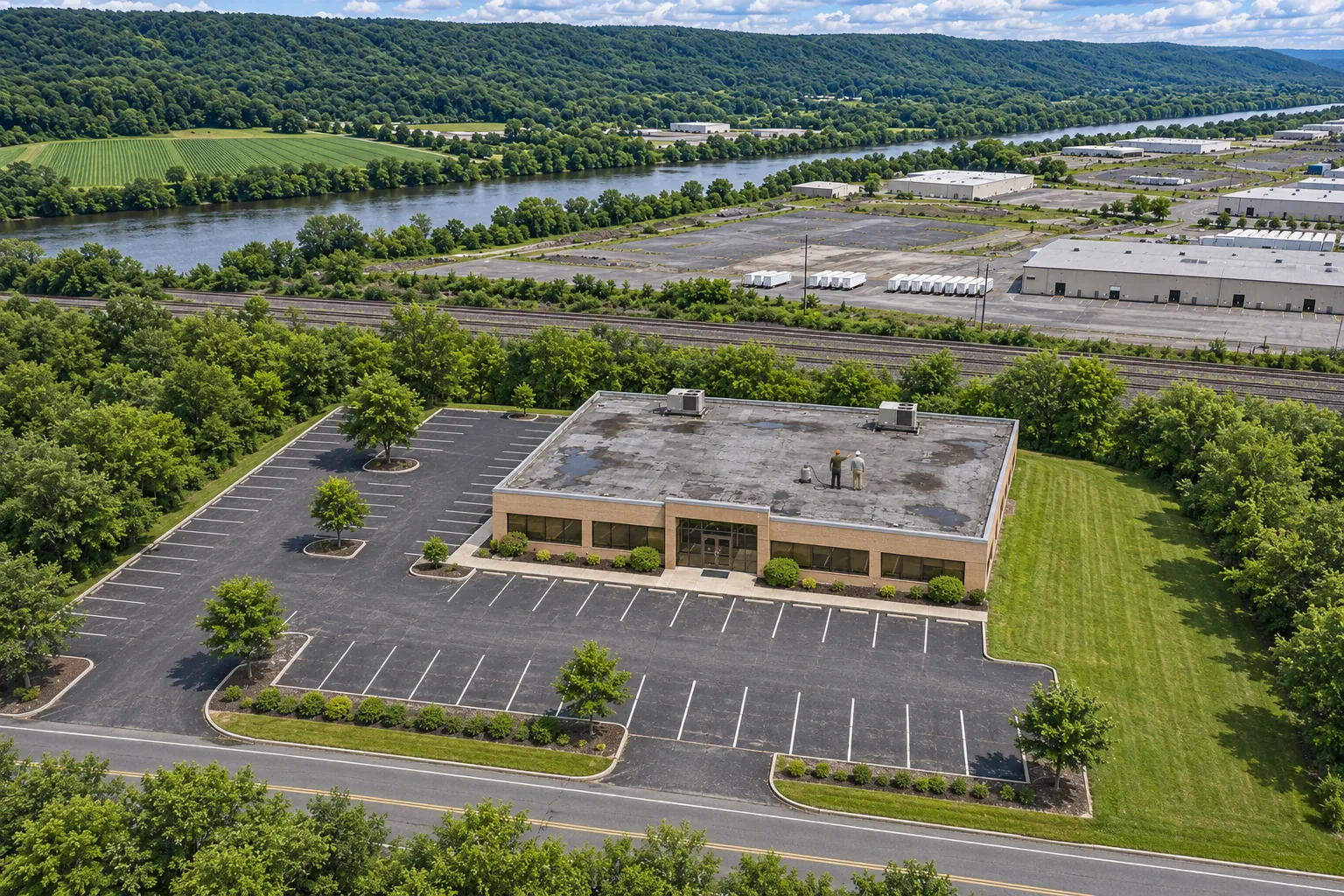
Metal roofs leak at fasteners, laps, and anything that pierces the panels.
Panels expand and shrink every day, slowly working screws loose until the washer no longer seals the hole.
Moisture held between overlapping sheets eats the steel from inside the lap, where it stays hidden longest.
Curb and pipe flashing that sits poorly on the panel ribs lets runoff under it on every storm.
Hail can punch holes, open laps, and bend flashing, beyond the dents that catch the eye from the ground.
Water running along framing inside shows up away from the hole, so the trace starts on the roof above.
Snow that melts and refreezes at the eave backs water up under panel ends and trim.
Can a metal roof be repaired? In most cases, yes, using the method that matches the panel and the damage.
Stripped holes get larger-diameter screws with new sealing washers, set snug against the panel.
Opened laps are cleaned, sealed with butyl tape, and stitched closed at the spacing the panel calls for.
Rusted-through or punctured sheets come out and new matching panels go in, lapped into solid metal on each side.
Flashing gets refitted to the rib profile, with closures and fasteners that keep runoff on top of the panel.
Light rust on firm steel gets cleaned and primed around the repair so the new detail holds.
Fixing the panels and laps that leak helps the whole building.
Four steps take a metal roof from leaking panels to a documented repair.
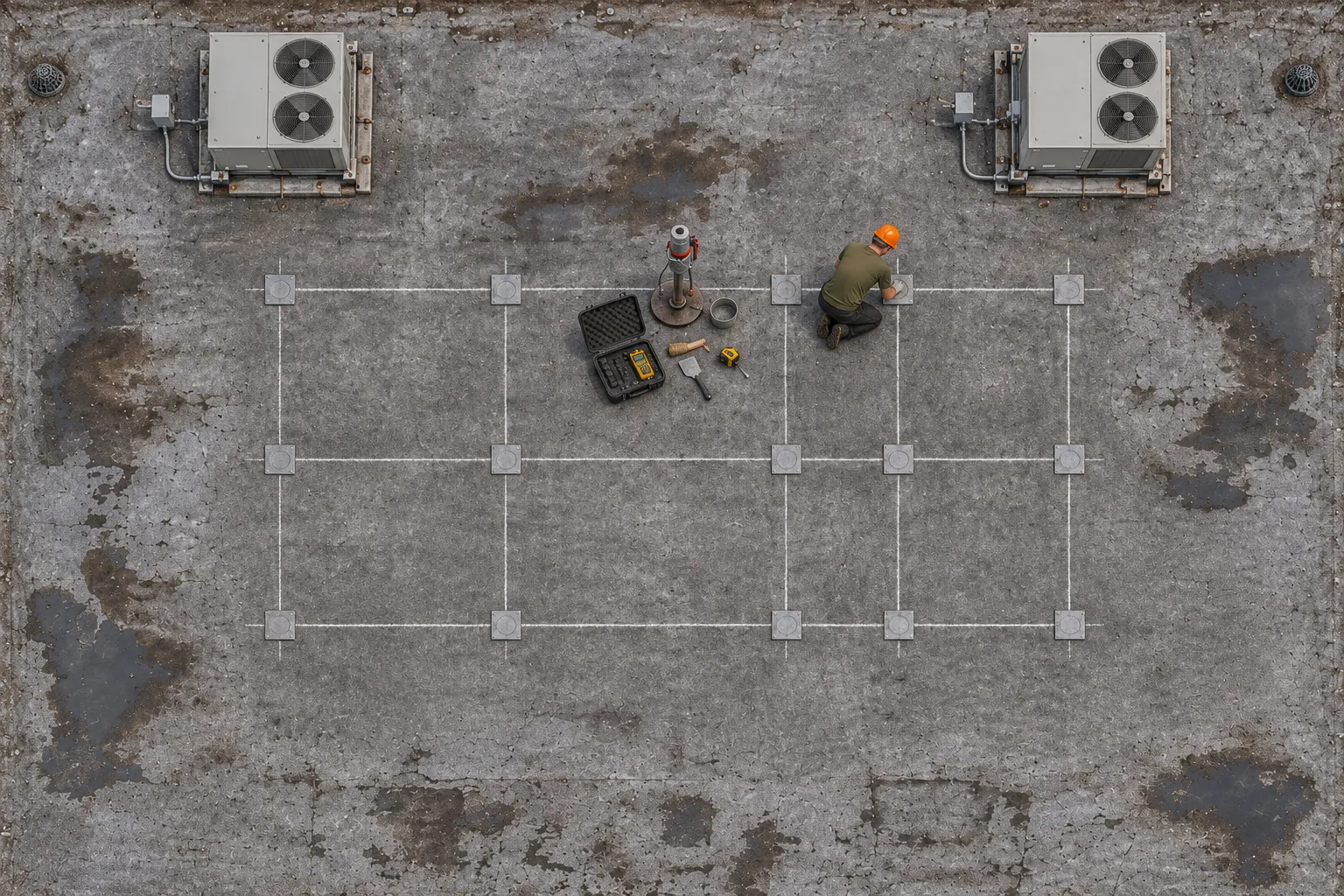
Fasteners, laps, and flashing around the reported leak get checked, along with the next seam over.
Rust depth and fastener grip show whether each panel takes a repair or needs a new sheet.
New sheets, oversize screws, sealed laps, and refitted flashing go on in that order.
Repaired laps and flashing get checked under water, and photos go into your roof file.
Metal roof jobs sometimes reach into these services.
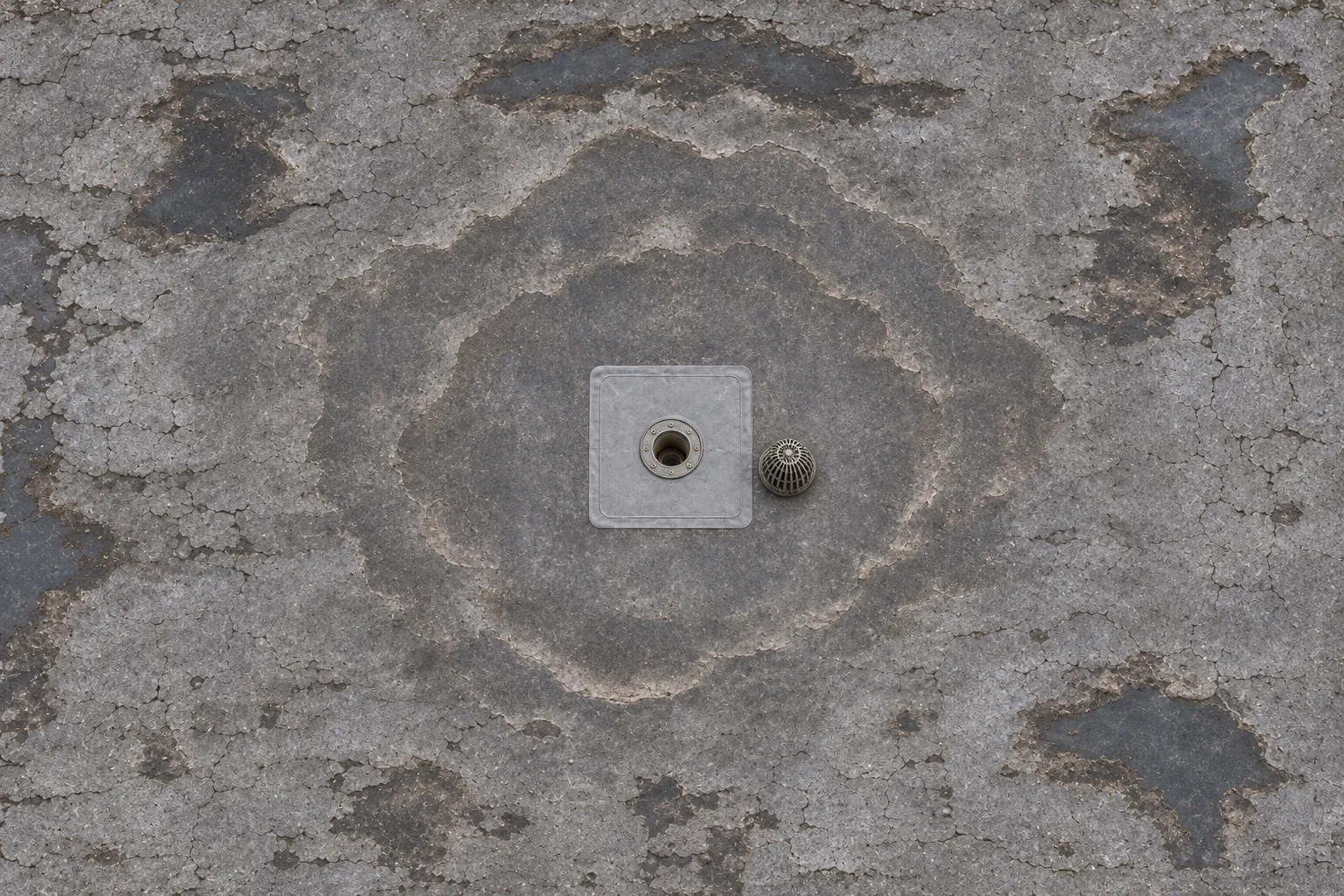
Seams, blisters, drains, and patches on membrane roofs.
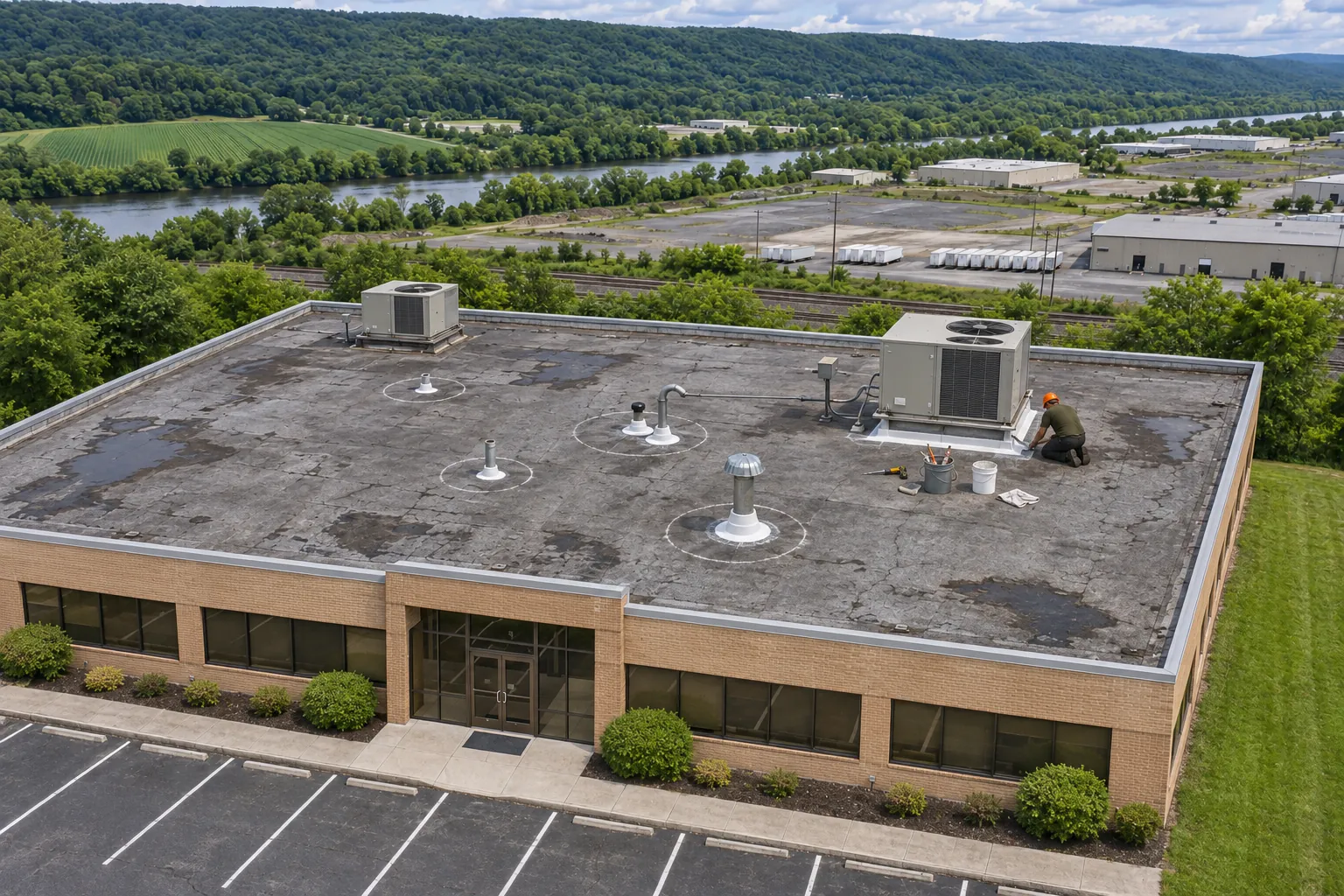
Drips with an unknown source, traced back to the entry.
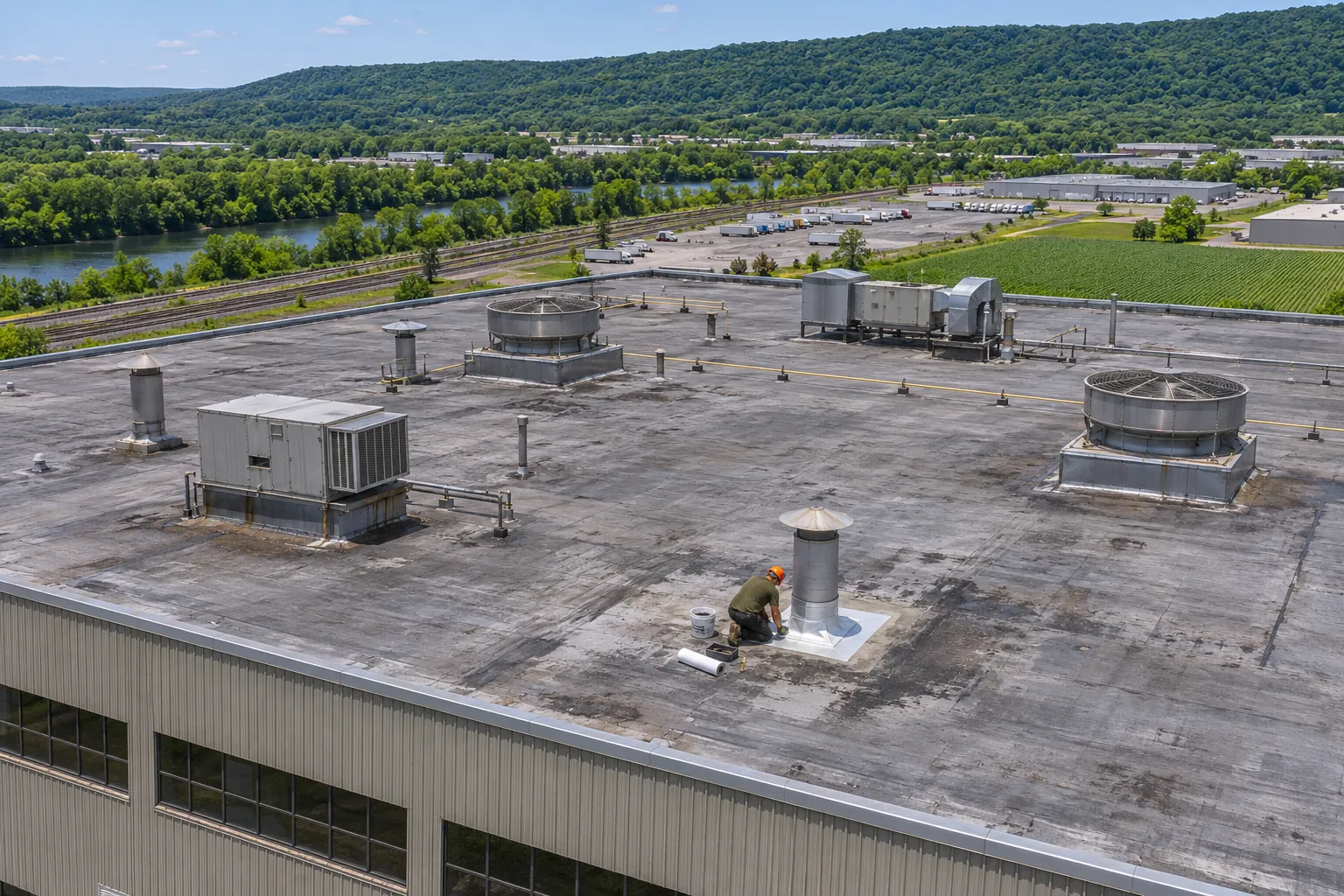
Stacks, drains, and phased work over running production.
Yes, when the metal around the hole, the fastening, and the next seam are in good shape. We check all three before choosing the detail. If the patch has nothing firm to connect to, the punctured panel gets replaced instead, and the sheets beside it stay.
We judge it from the strength of the panels, the rust, the fastening, and the details nobody has repaired yet. Repeated repairs in one area tell us something about moisture under the metal. Fixing each leak restores that spot, while the rest of the roof keeps its own condition.
Usually the cause is still there: the curb moves, the flashing never fit the panel profile, or service work keeps disturbing it. More sealant hides the joint for a season. We refit the flashing to the ribs and correct the fastening and runoff.
Dents are the visible part. Hail can also punch holes, open laps, and loosen flashing and fasteners. We trace any new leaks through the roof and set repair limits from what each impact did, rather than from how the panels look from below.
Yes. Standing-seam repairs focus on seam closures, clips, and the flashing at ends and penetrations, with any replacement panel matched to the profile and seam height.
Standing-seam panels move more than lapped ones, so clips and end details get checked for wear wherever the roof shows a leak.
Stripped holes get oversize screws with new sealing washers, set snug against the panel without crushing the washer. Where the steel around the hole has rusted thin, that section of panel gets replaced instead.
Snow and ice hold water at eaves and laps for days, and freeze-thaw cycles work fasteners loose. Leaks that stay hidden in summer rain often show up during the first thaw.
Yes, when they are part of the leak. Rusted gutter seams and eave trim that ice pulled loose let water back under the lowest panels, so they get refitted or replaced along with the roof repair.
Tell us where the drips land and what the panels look like, and we will inspect the metal roof.