Phased Repair
- Production
- Runs outside the work zone
- Protection
- One zone covered at a time
- Equipment
- Isolated zone by zone
- Schedule
- Several short windows
- Best For
- Spread-out roof damage
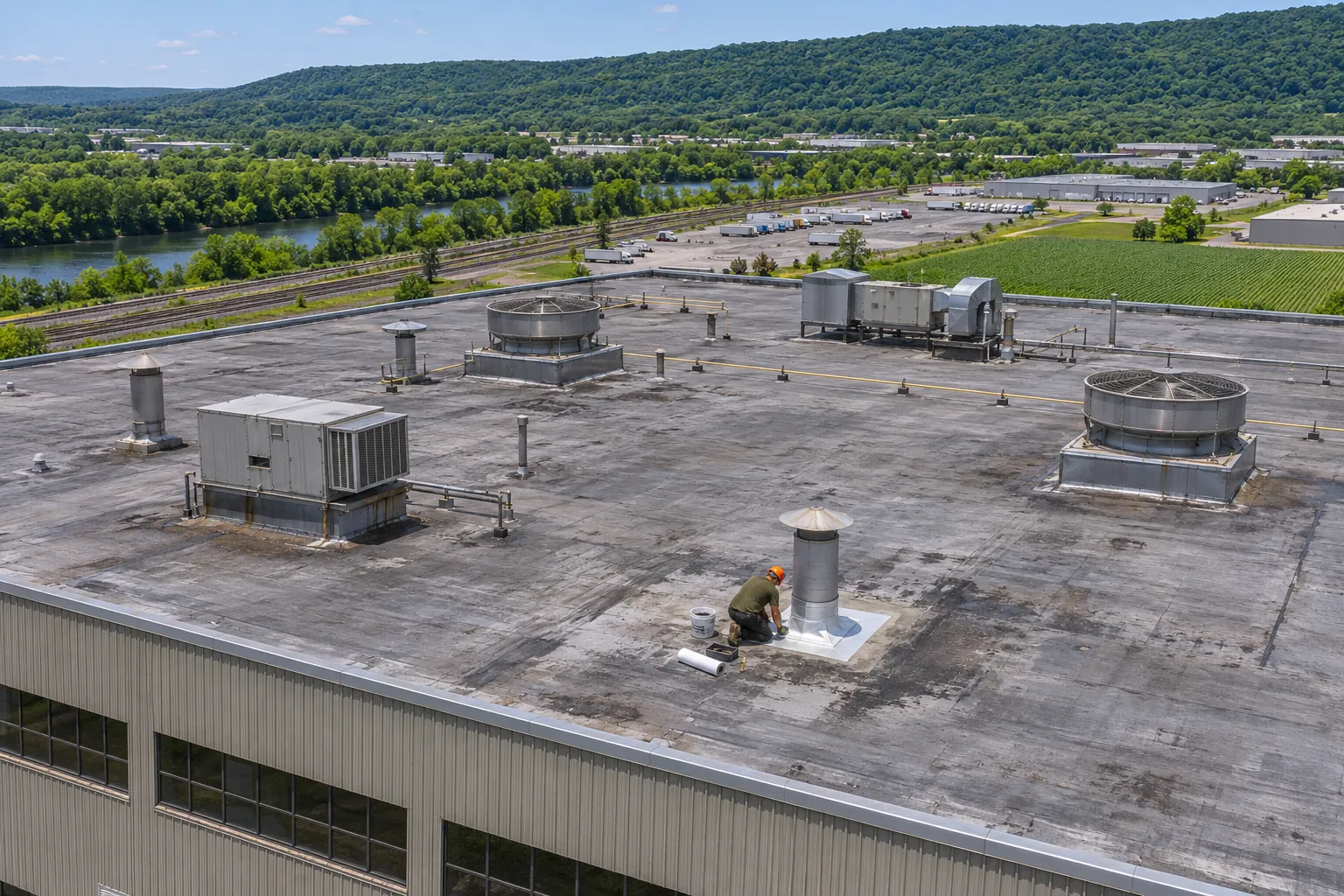
As a Bethlehem industrial roof repair contractor, we repair stack flashing, drains, and worn membrane on plant roofs, planned around the production below.
Bethlehem industrial roof repair on a working plant gets planned two ways: all at once during a shutdown, or in phases over running lines.
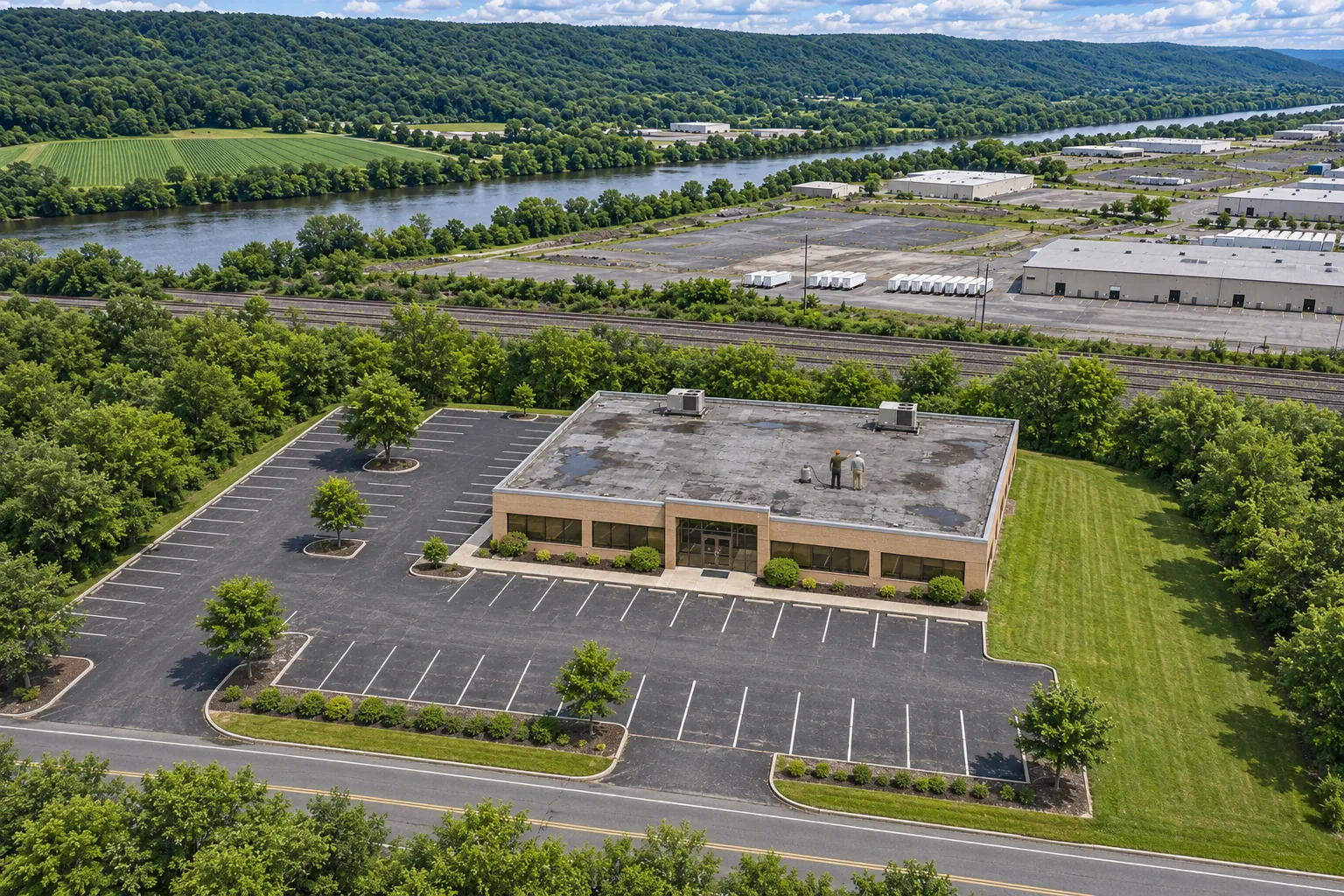
Plant roofs wear fastest where equipment, exhaust, and foot traffic meet the membrane.
Heat and vibration at exhaust stacks crack the base flashing, letting water run down the outside of the pipe.
Exhaust residue from fans softens some membranes over time, starting where the discharge lands.
Foot traffic to units and fans scuffs paths in the membrane, especially where nobody laid walkway pads.
Drains over machinery leak at the clamp, the drain body, or the piping, and each fix differs.
Any drip over running machines calls for shutdown of that area and a trace from directly above.
Heavy units on the deck can sag it between supports, leaving water standing around the curb base.
Industrial roof repair cost and scope both come from the inspection, which sizes every damaged area and wet zone.
Stack and vent bases get new flashing boots or sleeves rated for the heat at that pipe.
Damaged membrane under fan discharge gets cut out and patched with material that resists the residue.
Worn paths get patched, then covered with walkway pads along the routes technicians use.
The fault is located first, then roofing or plumbing repairs it with the equipment below protected.
Core cuts size wet areas so the repair covers the soaked board beyond the visible defect.
Plant roofs protect machines, product, and people, so a repair reaches all three.
Repairing roofs over production floors takes five steps, each agreed with the facility before work begins.
Equipment below, shutdown windows, and isolation needs get listed with the facility team.
Stacks, fans, drains, and traffic paths get inspected to learn why the roof failed there.
Core cuts mark how far moisture runs past the visible defect.
Repair zones get scheduled so only one production area is affected at a time.
Each zone gets repaired, checked, and photographed before the next one opens.
Plant roofs often need these repairs as well.
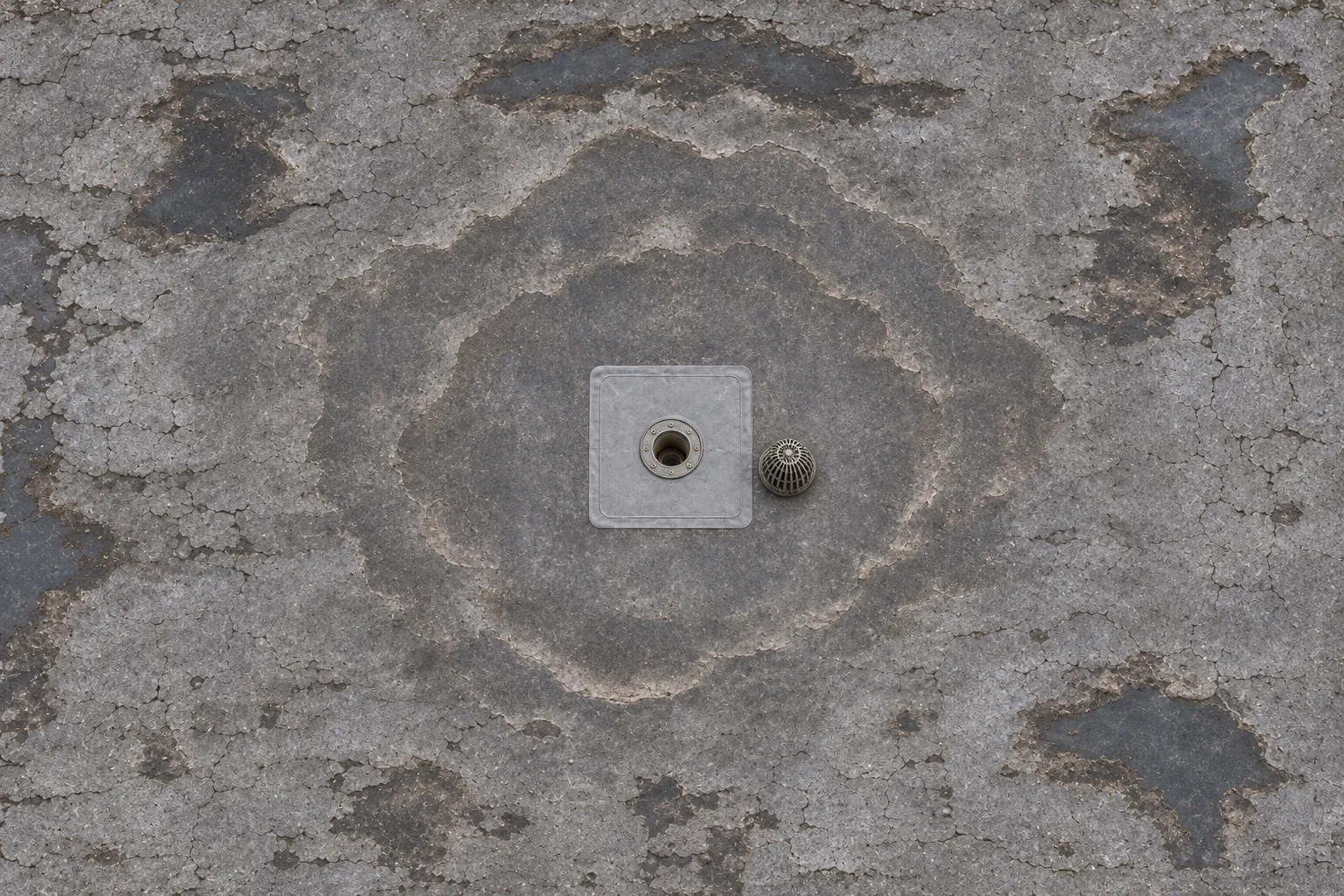
Seams, blisters, drains, and patches on membrane roofs.
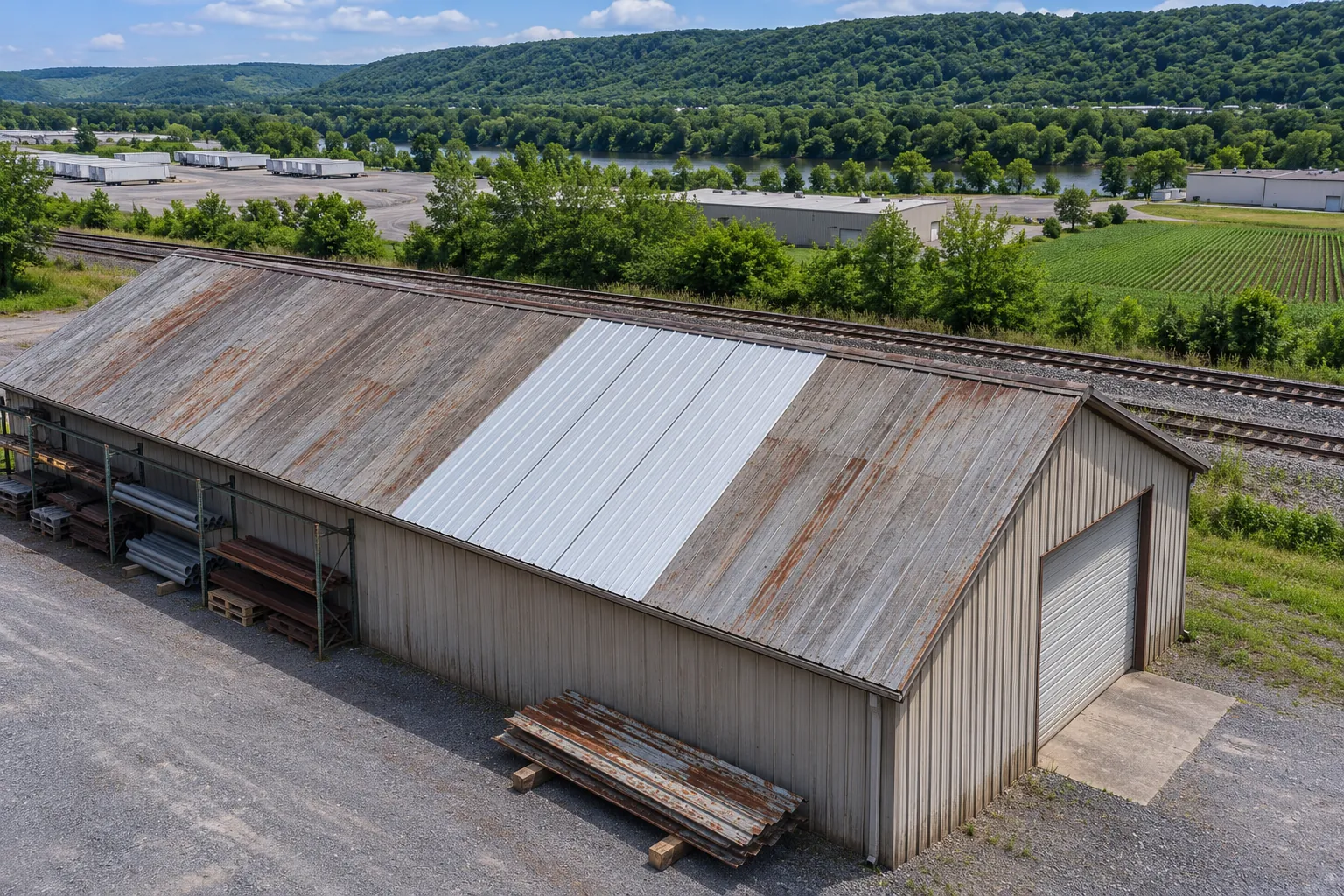
Panels, laps, fasteners, and curb flashing on metal roofs.
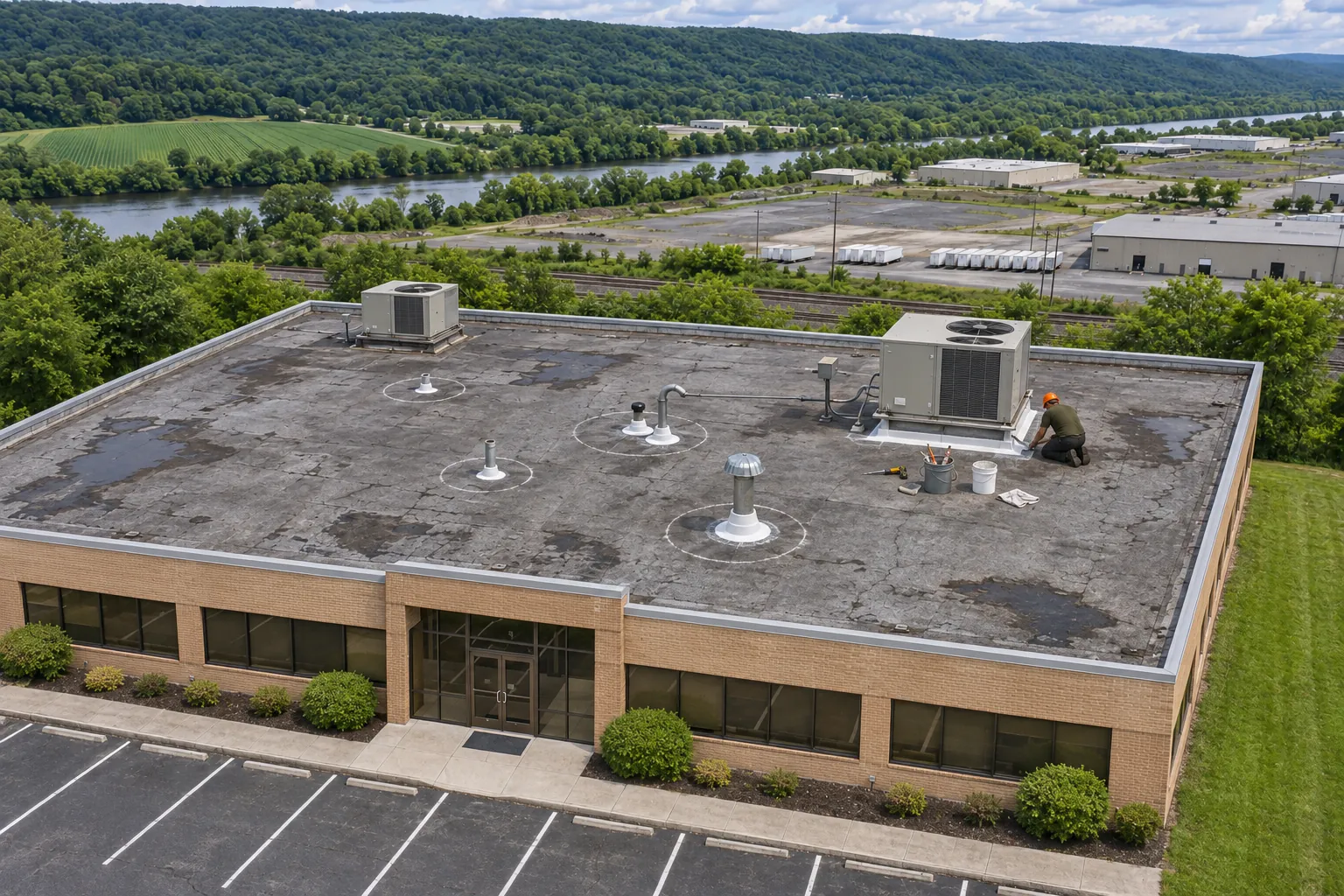
Drips with an unknown source, traced back to the entry.
From an inspection on the roof. We trace the leak, identify the roof system, measure each damaged area, take core cuts for wet insulation, and check flashing, drains, and access. Hidden wet board often stretches a repair past the visible opening, and the scope shows where repair ends and rebuilding starts.
We repair industrial roofs in Bethlehem and the towns on our service area page. If your plant is elsewhere, call with the address and we will tell you plainly whether we can take it on.
Plants near the listed towns are often within reach, so it is worth asking.
Planning comes first. We list the equipment that needs protecting, the limits on removing roof material, and any shutdown windows. Work then moves zone by zone, so only the area under repair is closed off, and the plan says so in writing.
The facility, the roofer, and the plumber decide it together once the fault is found. We check whether it sits in the roofing, the drain body, or the piping, which sets the access and protection needed before the assembly is opened over equipment.
Why the roof failed. Exhaust, vibration, service traffic, and the process below all wear a plant roof differently. Knowing the cause sets the preparation and access, and the moisture boundary sets how far the patch extends.
A patch placed without knowing the cause usually fails at the same spot within a season.
Often, yes, when the zone under the repair is protected and cleared. Noisy or dusty steps get scheduled for breaks or off-shifts, and the plan lists which areas close and for how long.
Yes, with tighter protection below. Overhead containment, sealed work zones, and timing agreed with the facility keep debris away from the process under the roof.
Discharge from some fans carries oils or chemicals that land on the membrane around the fan and soften or swell it over time. We patch the damaged area with a material that resists that residue and note the fan for routine checks.
Tell us what runs under the roof and where it leaks, and we will plan the inspection around it.