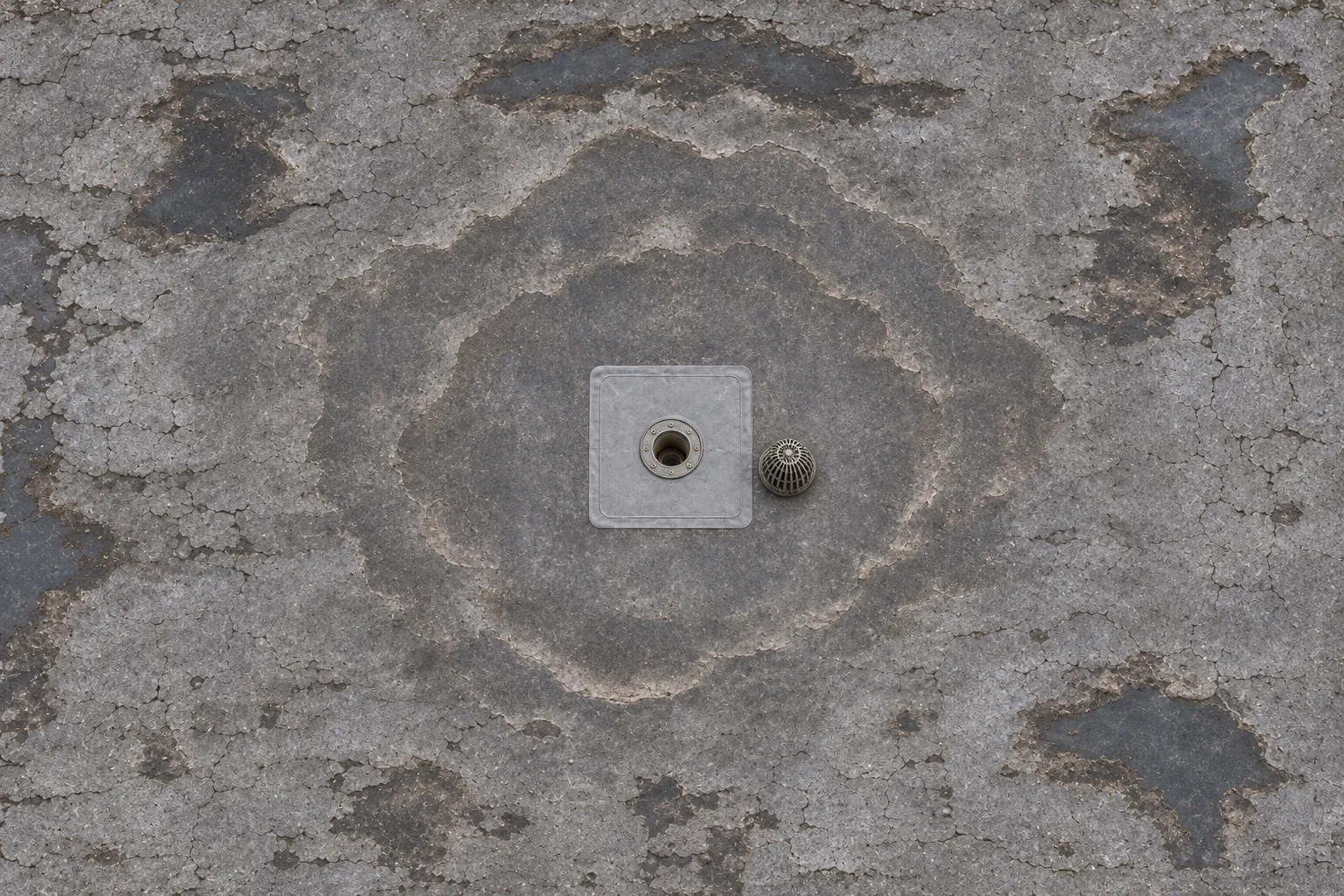
Flat Roof Repair
Low-slope membrane and built-up roofs: seam welds, blister repairs, drain reflashing, and patches matched to the existing sheet.
See flat roof repair
We offer commercial roof repair services in Bethlehem for four kinds of roof trouble. The inspection decides which one your building needs.
The commercial roof repair services in Bethlehem below are grouped by roof system and building use. The table under the cards matches common buildings to each repair.
Low-slope membrane and built-up roofs: seam welds, blister repairs, drain reflashing, and patches matched to the existing sheet.
See flat roof repair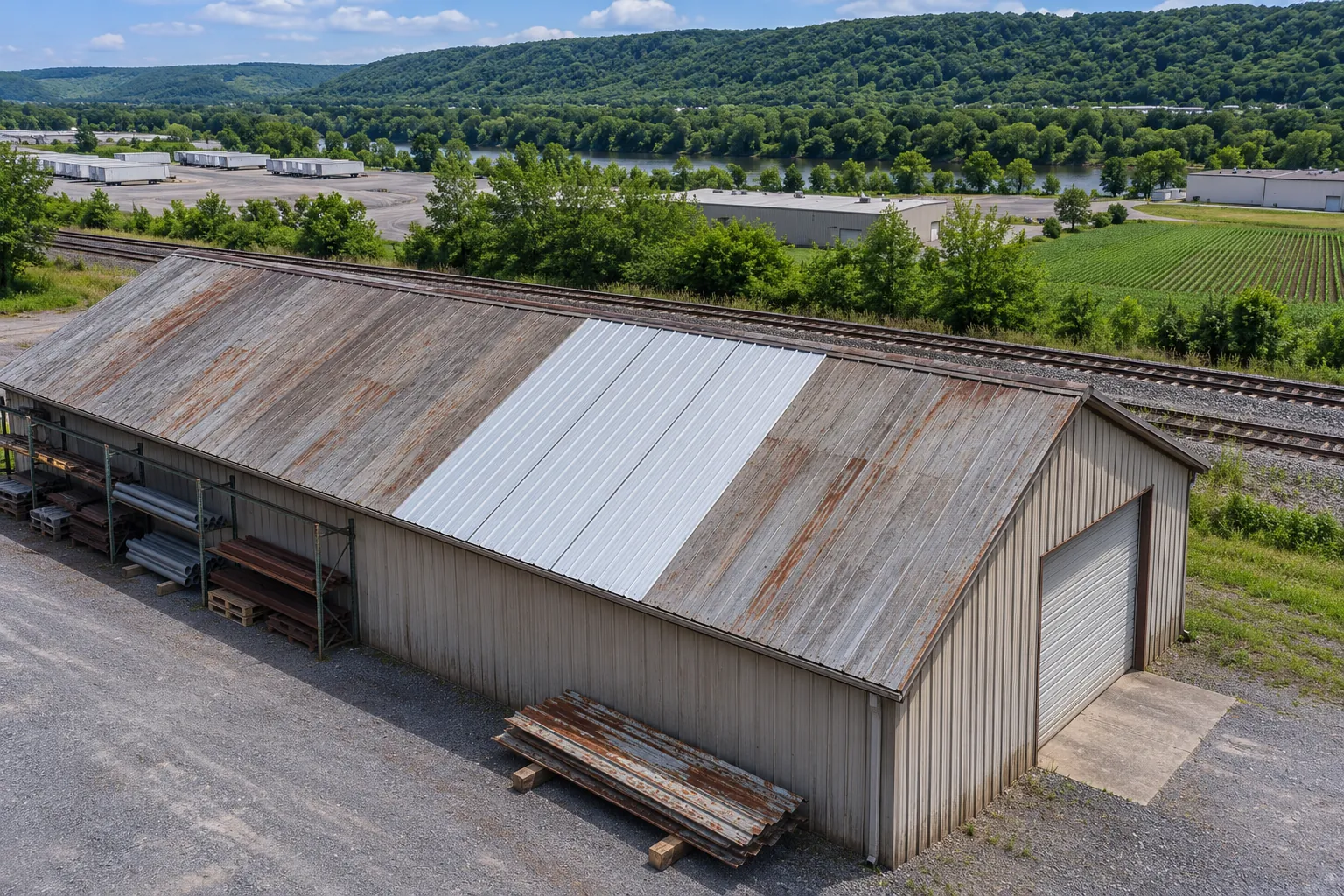
Panel roofs on shops and storage buildings: new sheets, refastened laps, curb flashing, and repairs after hail.
See metal roof repair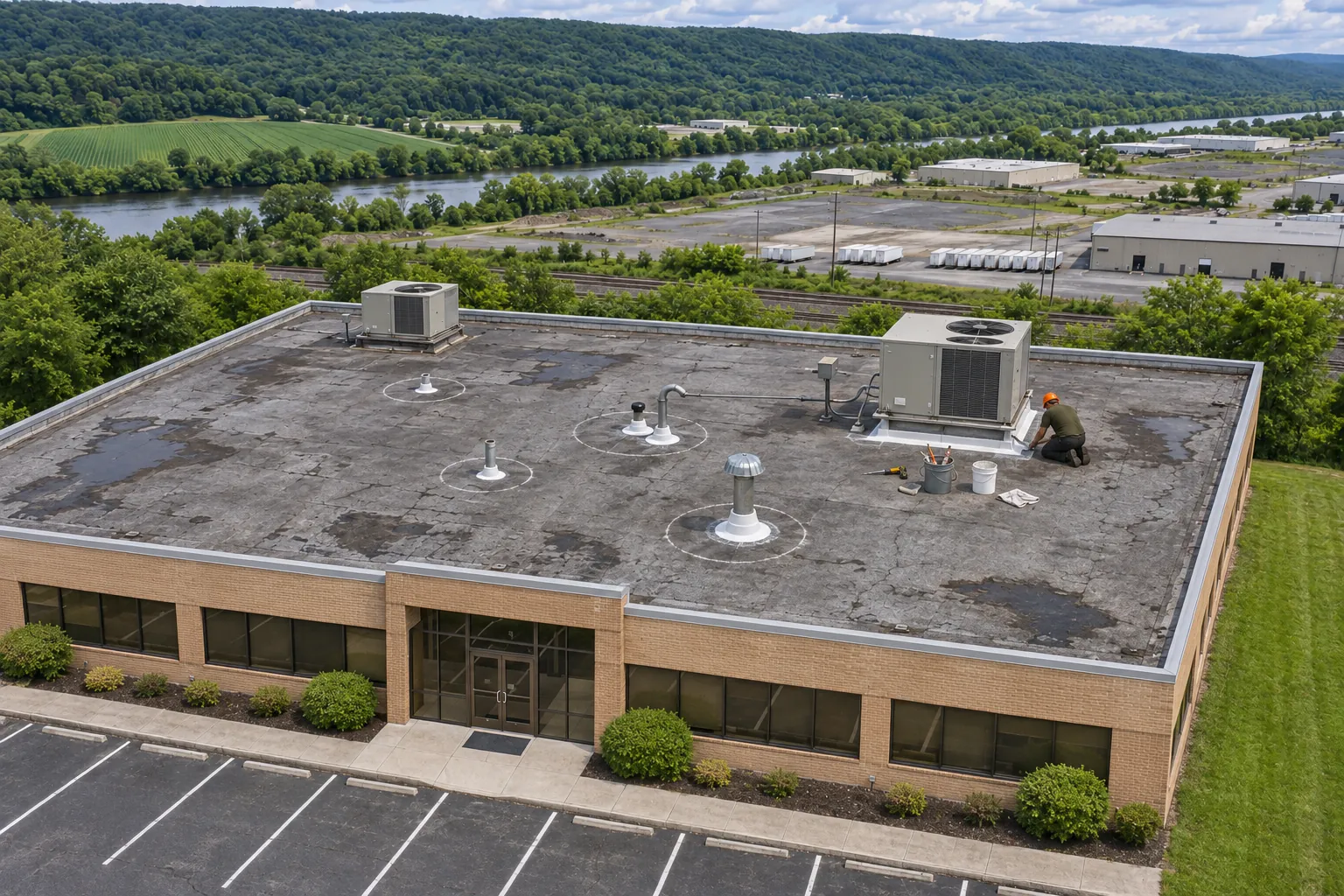
Known leaks with an unknown source: thaw leaks, parapet water, ice at edges, and stains near rooftop units.
See leak repair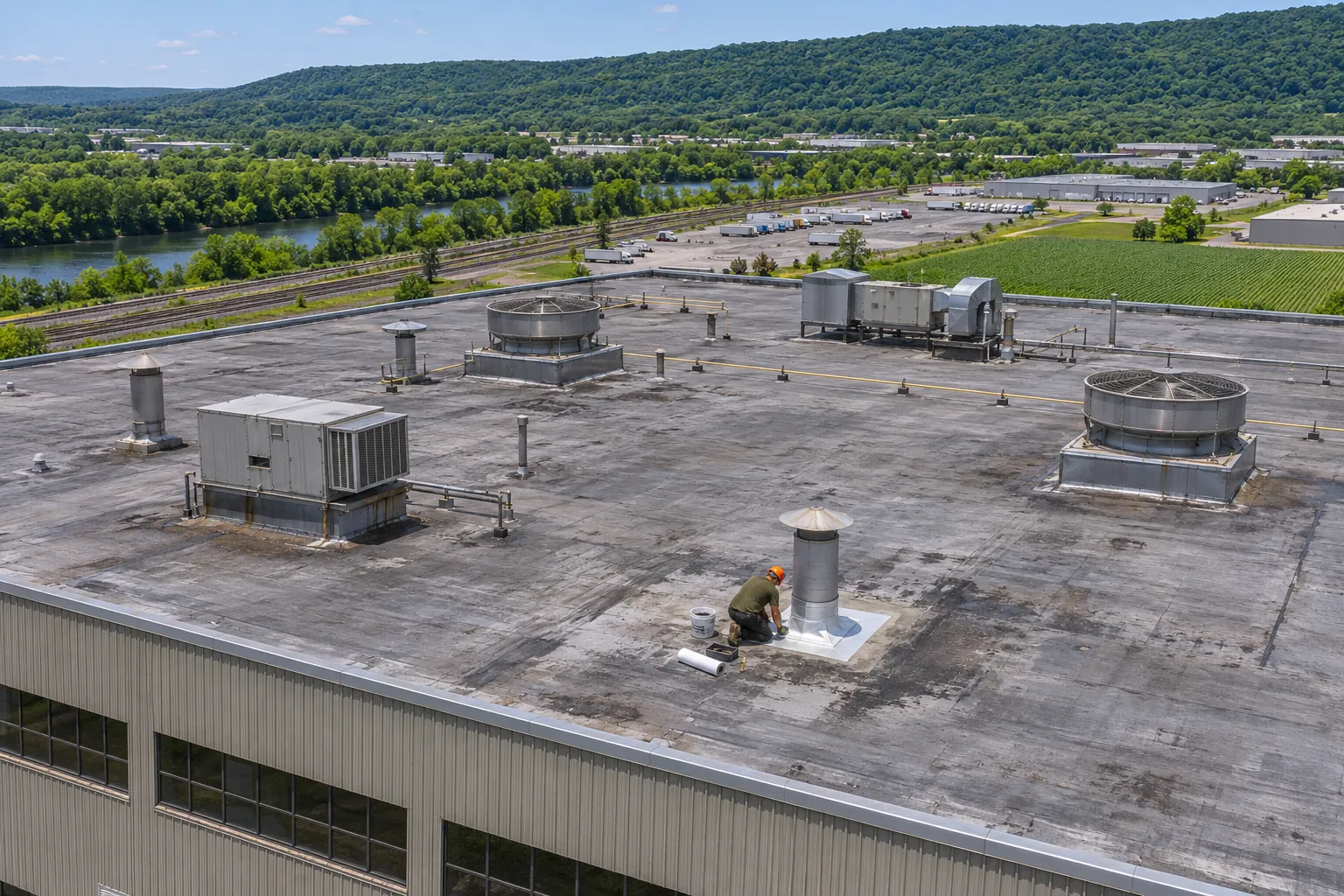
Plant roofs with stacks, fans, and drains over machinery, phased so production keeps running where it can.
See industrial repair| Building | Flat Roof Repair | Commercial Metal Roof Repair | Commercial Roof Leak Repair | Industrial Roof Repair |
|---|---|---|---|---|
| Offices with rooftop units | Membrane at unit curbs | Rarely | Condensate vs roof water | Rarely |
| Leased retail and flex space | Ponding at interior drains | Metal canopies and fascia | Tenant-reported drips | Rarely |
| Warehouses over racking | Seam runs and patches | Lapped panel bays | Water traveling along deck | Wide bays, heavy traffic |
| Plants with exhaust stacks | Base flashing on curbs | Rarely | Leaks over equipment | Stacks, fans, and walkways |
Every service starts from the same question: can the failed area be repaired into firm roofing, or does the wet zone run too far?
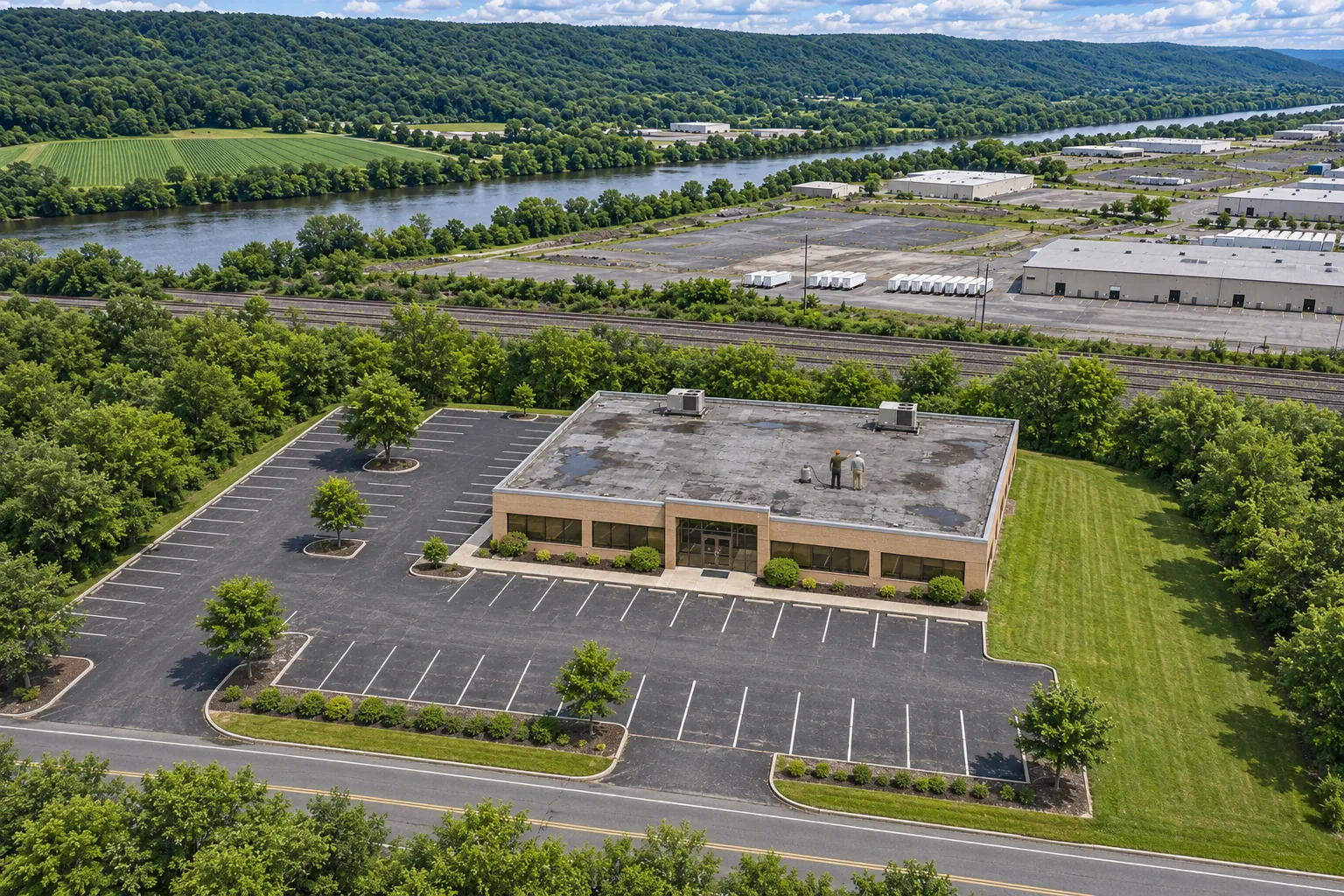
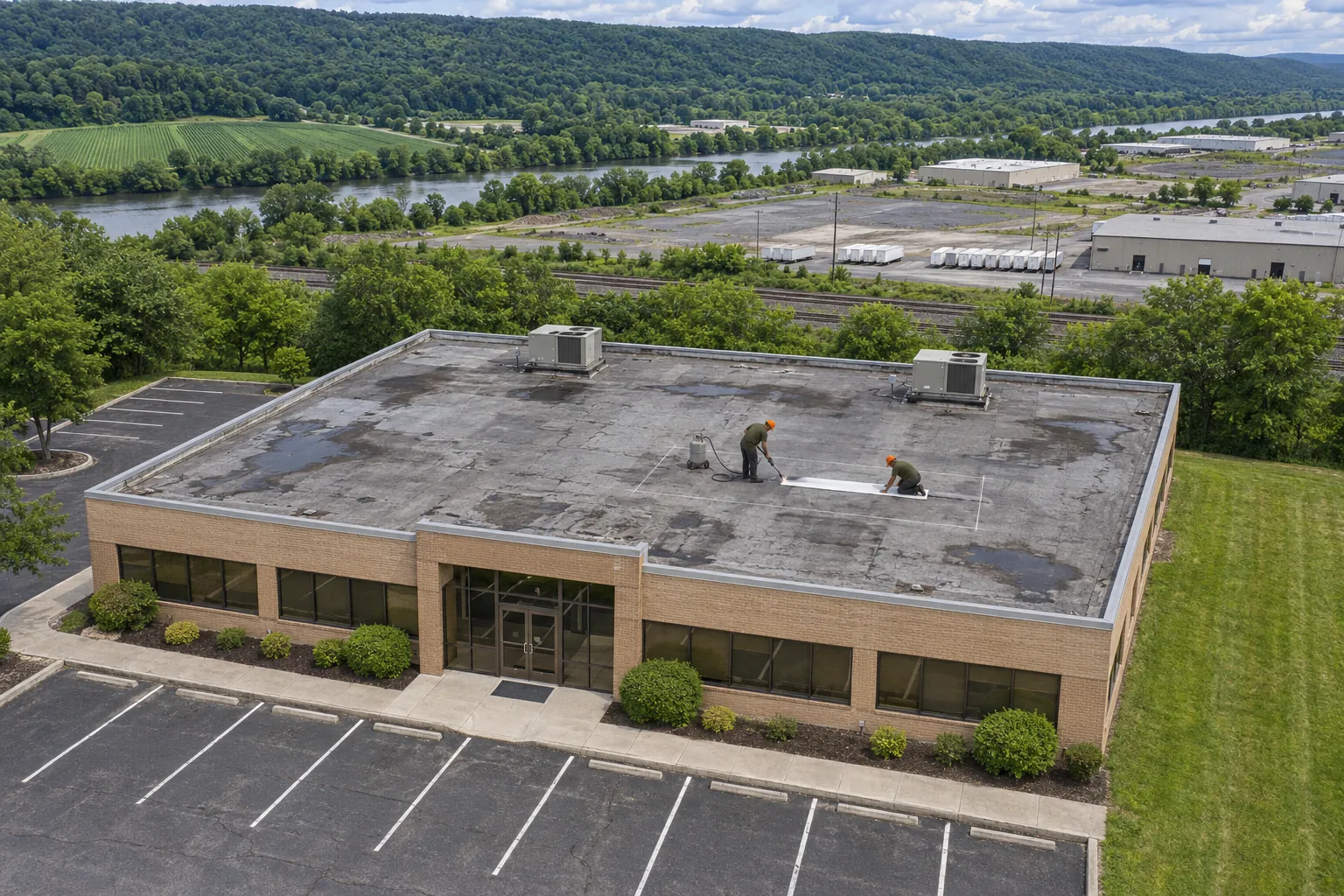
Flat, metal, leak, and industrial repairs follow the same four steps, with materials changing by roof system.
Once access is safe, we photograph the reported area, the drains, and every penetration nearby before touching anything.
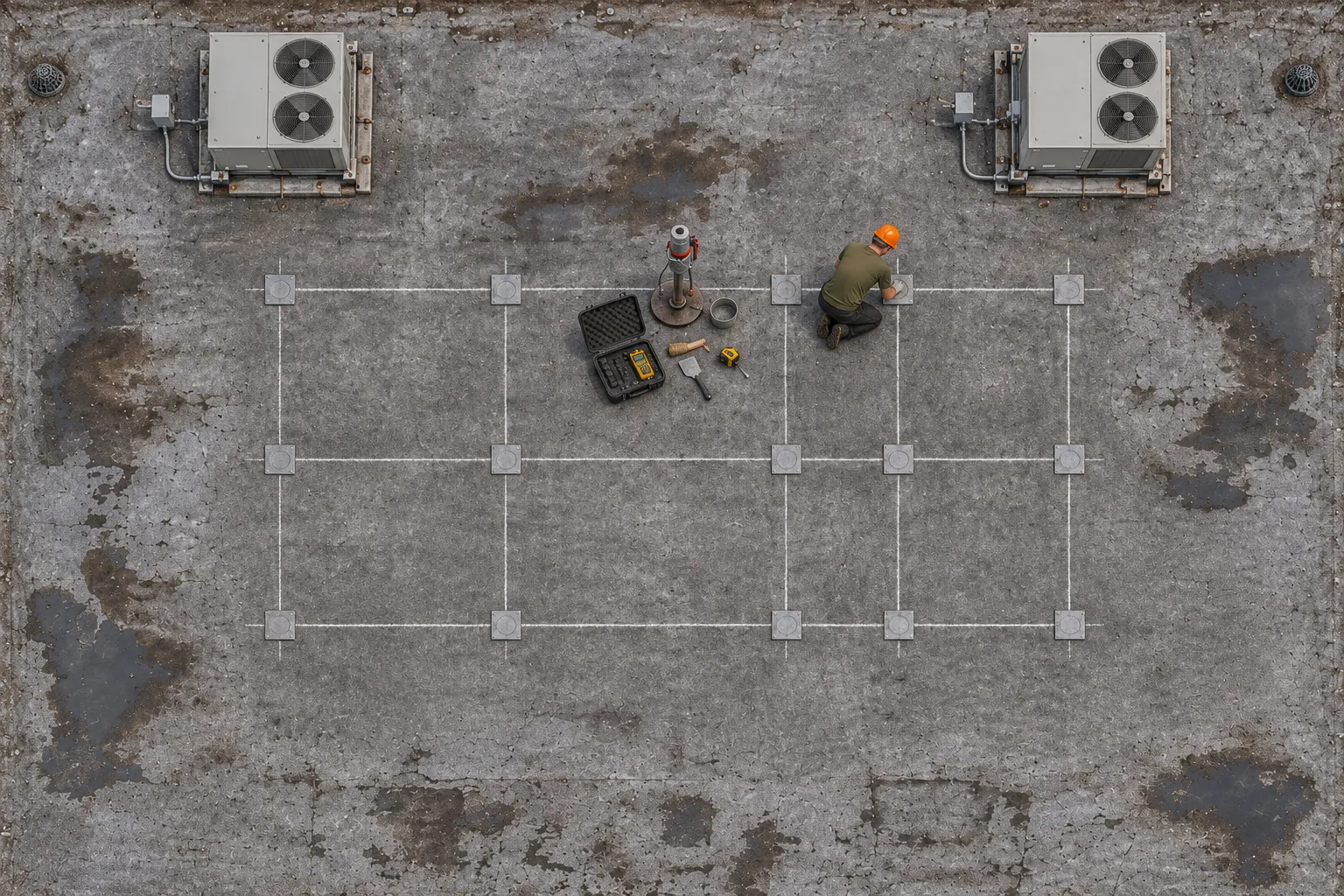
Readings and core cuts mark where moisture stops, which sets how far the repair has to reach past the visible opening.
Membrane, metal, flashing, or drain parts are chosen to bond with the roof already there, then installed on clean, dry surfaces.
Each repaired detail gets checked under water or the next rain, and the notes go into your roof file.
Photos and notes for every repaired detail go to you for the roof file and any insurer or lease review.
Most calls trace back to one of these four conditions on the roof.
Heat, cold, and foot traffic pull welded or taped laps apart until rain runs under the sheet.
Corrosion where metal sheets overlap thins the steel and loosens fasteners over several winters.
A lifted clamp ring or a clogged strainer holds water at the outlet until it finds a weak seam.
Drips on stock or equipment call for a trace right away, starting at the roof directly above.
Flashing around units and vents pulls loose after service visits, and runoff slips under it.
Storms can split brittle membrane and puncture metal panels, often in places nobody walks.
Start with the roof system and the symptom. Membrane roofs with seam or drain trouble fit flat roof repair, panel roofs fit metal repair, a drip with no known source fits leak repair, and plant roofs with stacks and equipment fit industrial repair. The inspection confirms the match.
Yes. A warehouse with a membrane field and a metal canopy, or an office with a leaking unit curb and a worn drain, gets one inspection and one scope that lists each repair by location and roof system.
Combining them saves a second trip to the roof and keeps all the findings in one record.
Yes. Most repairs happen with the building in use. We plan the protected zone below the work, keep access routes clear of docks and entrances, and stage material away from doors and windows people use.
The address, where water shows up inside, when it leaks, and any recent rooftop equipment service. Old repair records, warranty papers, and roof plans help if you have them, along with the name of whoever controls roof access.
Photos of the stain and any drip spots help us plan where to start on the roof.
Small repairs to a seam, drain, or curb usually finish in a day once the roof is dry and the material is on hand. Larger repairs with wet insulation take longer and get scheduled in sections.
Yes. Membrane roofs get checked for splits and punctures, metal roofs for holes, opened laps, and loose flashing. The scope describes what each storm did, separate from older wear.
We tell you plainly which sections are past repair and why, with core results and photos. Repairable areas still get repaired, and the scope separates the two so you can plan the larger work.
Yes. We check how well each old patch still bonds and whether moisture sits under them. Patches that still hold stay; failed ones get cut out and the area repaired once, so the roof stops collecting layers.
We repair the roofing around equipment and racking, and coordinate with the equipment owner when a unit or panel has to be moved or lifted to reach the membrane underneath it.
Tell us what the roof is doing and where, and we will match the right repair after the inspection.