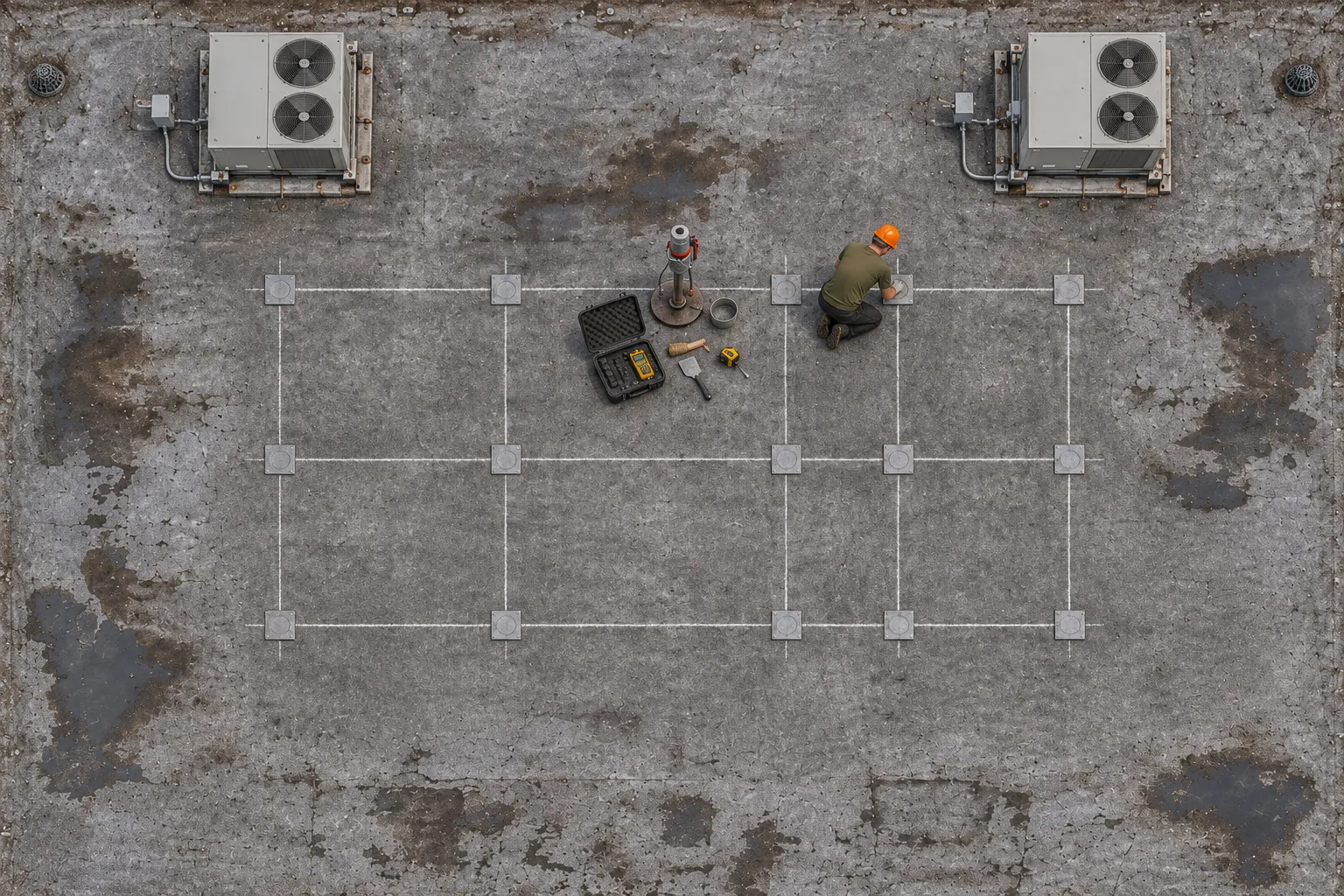
Traced Repair
- Where Water Shows
- Ceiling tile by the hallway
- Where It Enters
- Coping joint on the parapet
- Path Inside
- Behind the wall flashing
- What Gets Fixed
- Coping and termination
- Proof
- Dry after the next storm

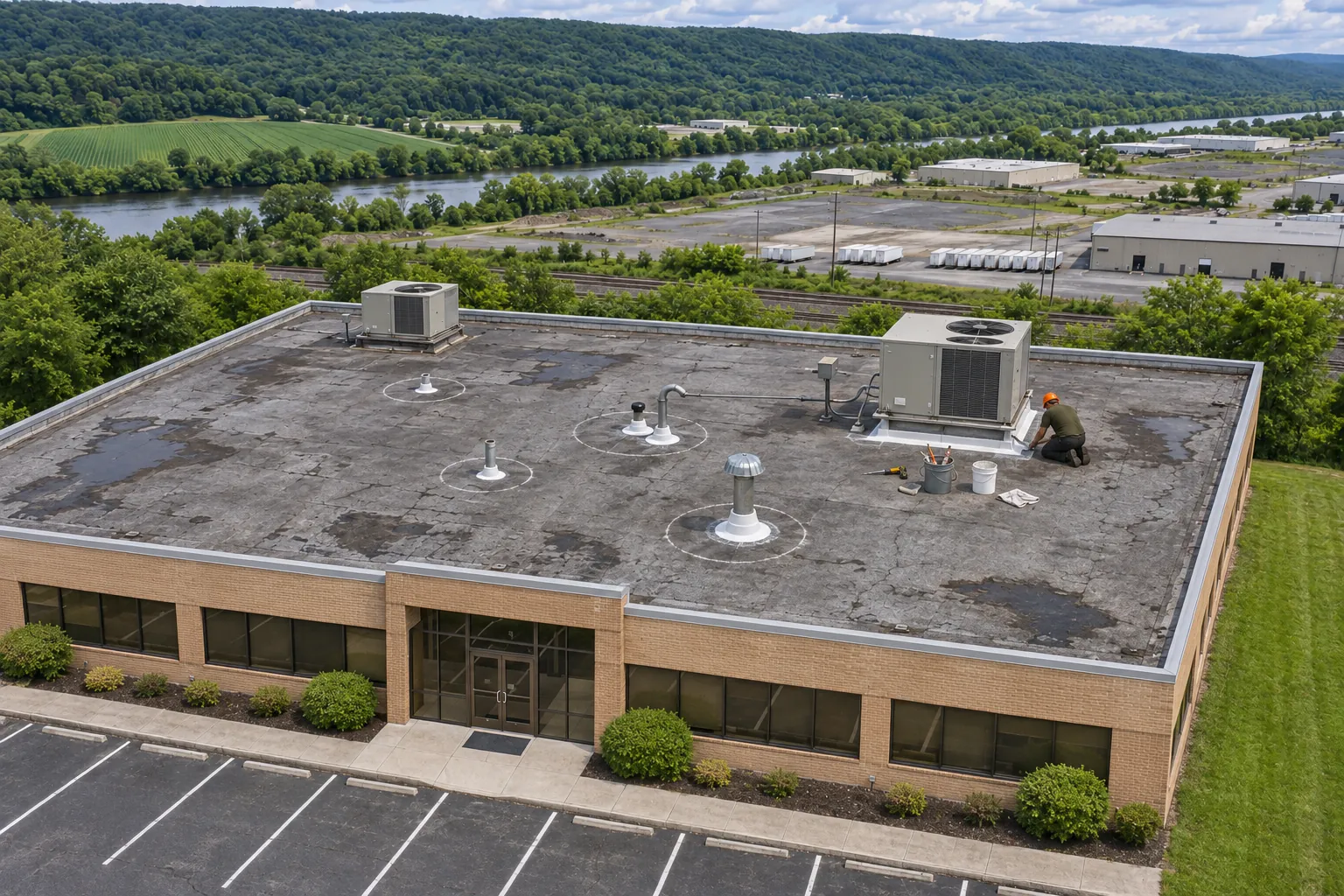
As a Bethlehem commercial roof leak repair contractor, we trace drips back to the parapet, seam, drain, or penetration letting water in, then repair that detail.
Bethlehem commercial roof leak repair begins by separating where water drips from where it enters. The two rarely line up on a commercial roof.
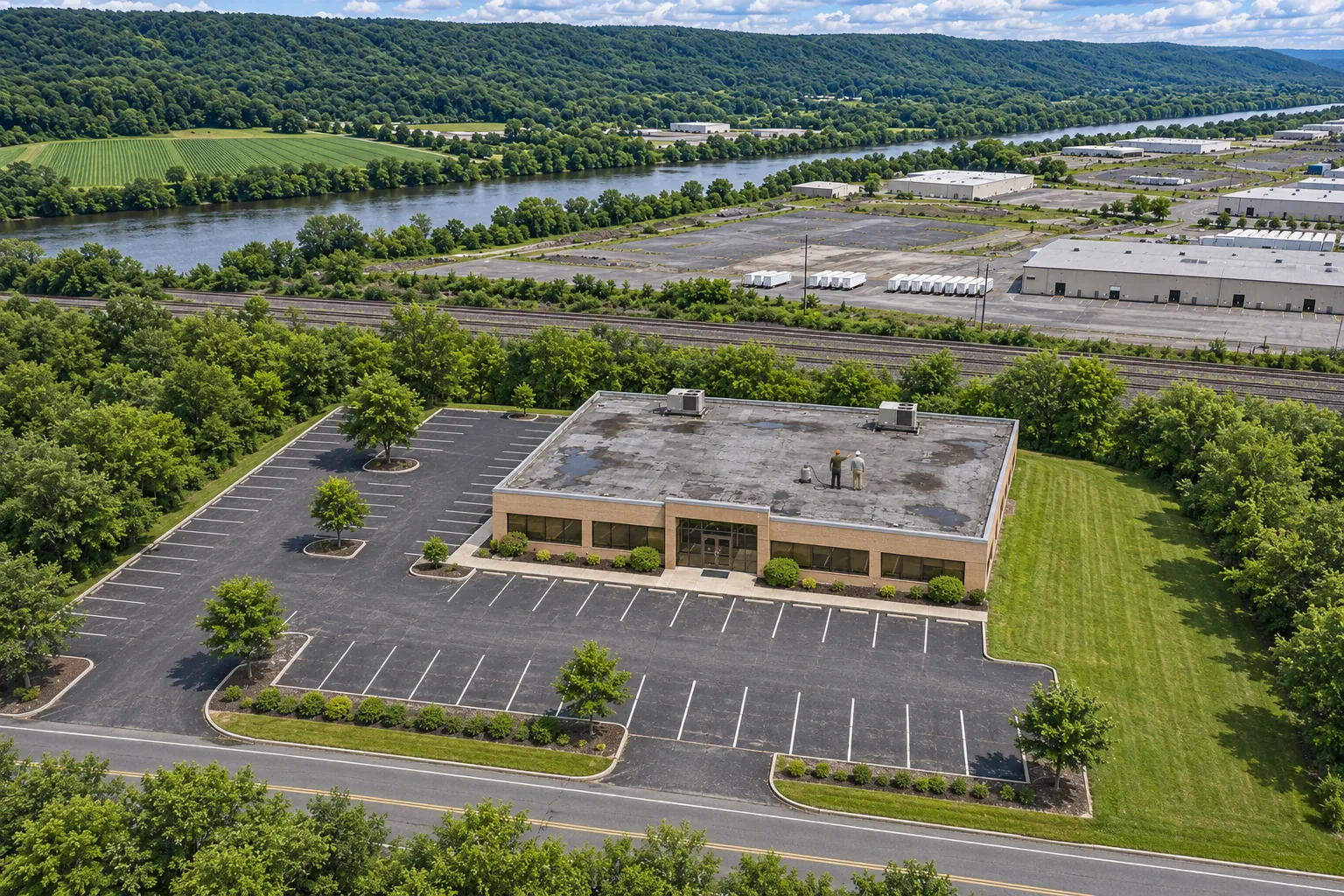
Leaks tell you where they started by when and how they show up.
Meltwater that backs up at frozen outlets finds weak laps and old repairs that stay dry in plain rain.
Open coping joints and wall cracks feed water behind the flashing, so stains appear below the wall.
Ice at an edge or scupper holds meltwater against flashing and seams until it gets under them.
Drips under equipment can come from condensate, service panels, or curb flashing, each fixed by a different trade.
Steady drips in every rain mean an open detail, and the wet insulation around it spreads the damage.
Each leak source gets the repair that closes it, after the trace confirms the entry point.
Coping joints get resealed or reset, and wall flashing is reterminated above the membrane.
Outlets that back up get cleared, reflashed, and set so water leaves before it freezes.
Curb, pipe, and vent flashing gets rebuilt once mechanical sources are ruled out with the HVAC technician.
Old patches that failed in the thaw get cut back to firm roof and repaired again.
Edge metal and gutter joints that ice pushed open get refastened and resealed so meltwater stays outside.
Finding the true entry point saves repeat work for everyone involved.
Five steps take a leak from a stain on the ceiling to a closed entry point.
Interior stains, drip spots, and timing get noted and photographed before we go up.
On the roof, seams, walls, drains, and penetrations above and upslope of the stain get checked in turn.
A water test or moisture readings confirm the entry point before any repair is chosen.
The failed detail gets repaired, and wet insulation along the water path gets replaced.
Photos and notes go to you, ready to share with a landlord, tenant, or insurer.
A traced leak often points to one of these repairs.
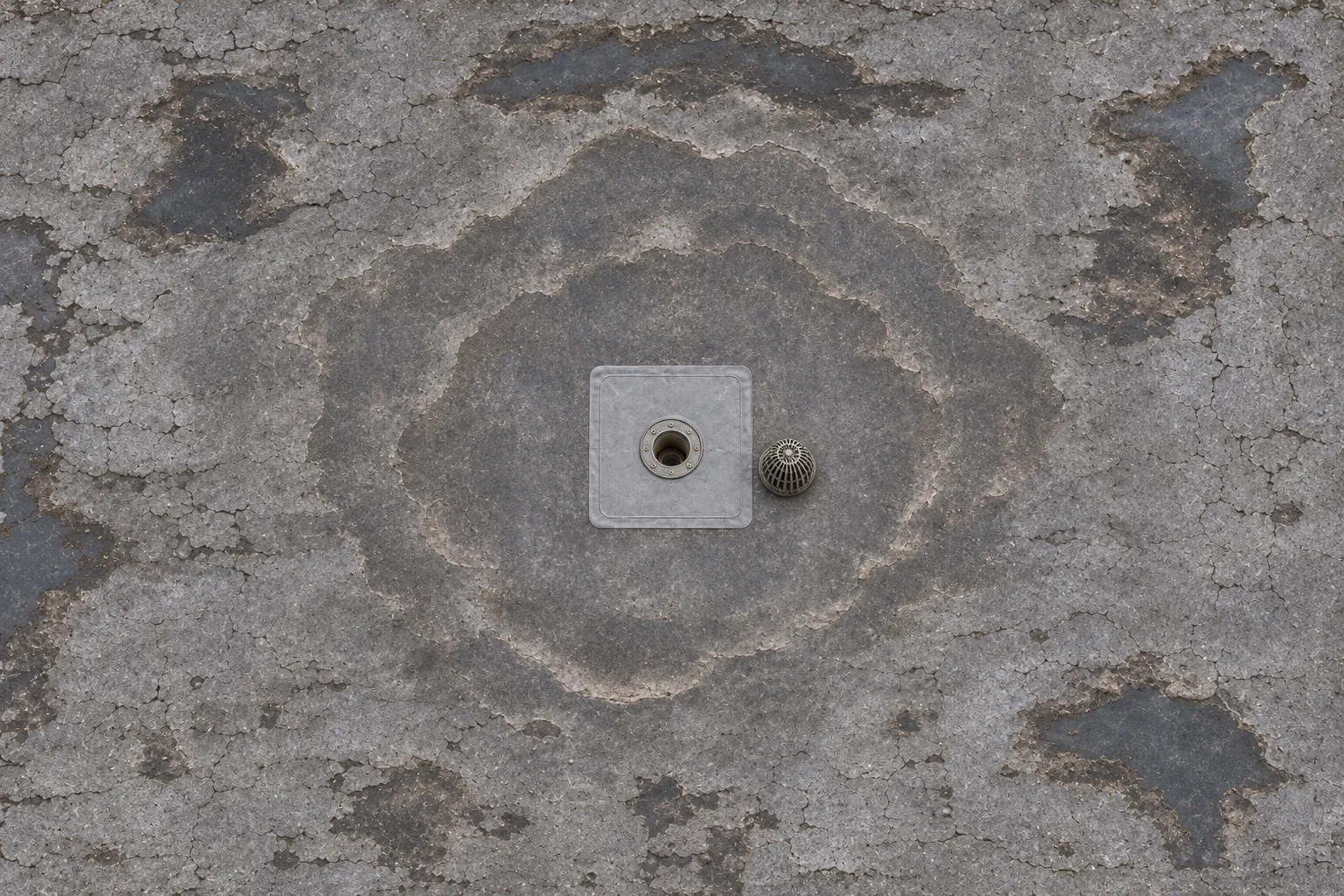
Seams, blisters, drains, and patches on membrane roofs.
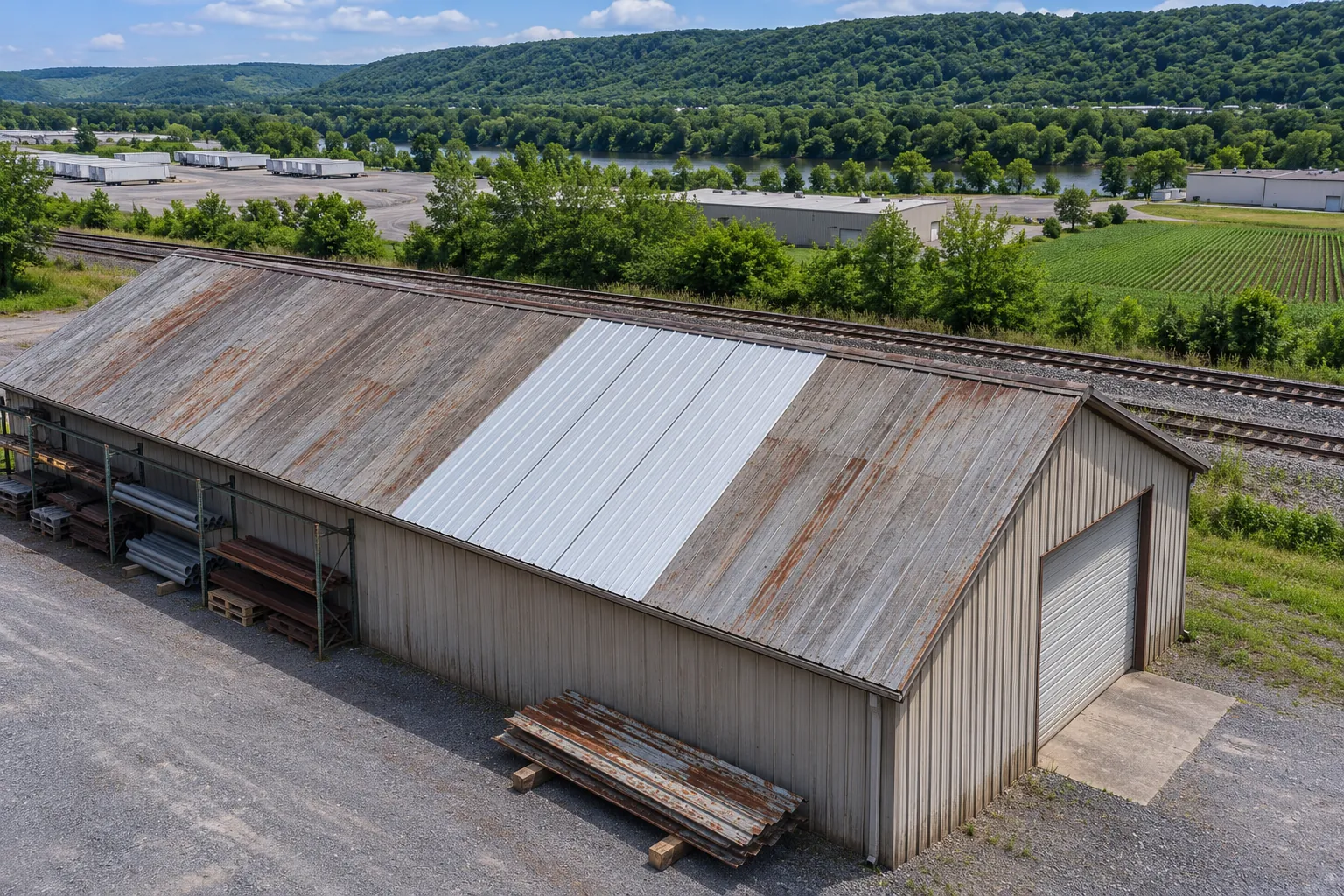
Panels, laps, fasteners, and curb flashing on metal roofs.
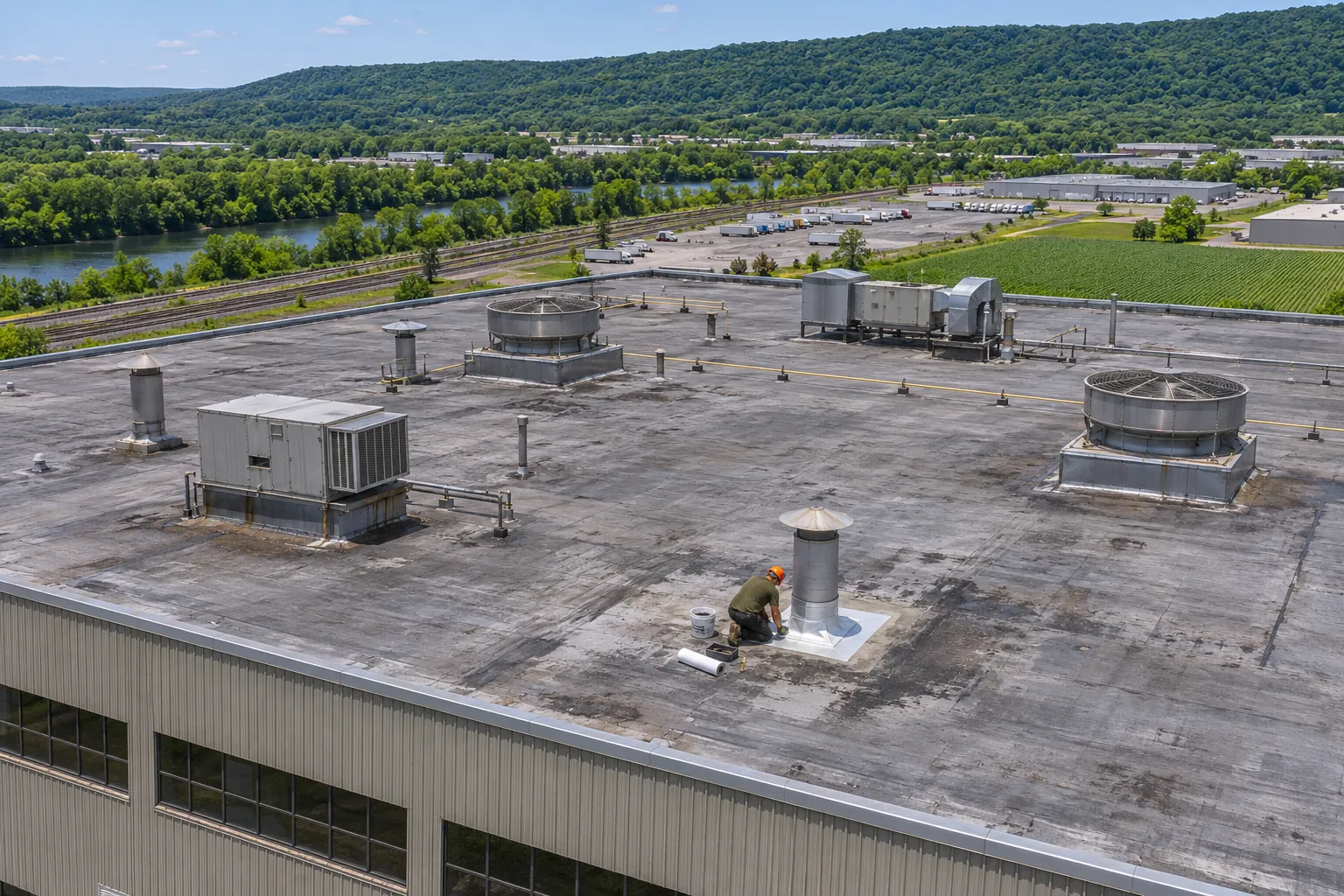
Stacks, drains, and phased work over running production.
The lease decides it, through its repair, maintenance, and notice terms. We document the defect on the roof and the access the repair needs, so owner and tenant can read their agreement against the same facts. Owning the building alone settles nothing about who arranges or pays.
Thaw opens water paths that rain never uses. Snowmelt backs up behind frozen outlets and reaches weak details beside the old repair, and freeze-thaw movement widens existing gaps. We inspect the old repair and the roof around it once access is safe.
Coping joints, cracks in the wall, and the top of the flashing get checked together, then compared with the roofing below and the stain inside. Water that enters above the membrane runs behind the wall flashing, so the repair goes where it enters.
Yes. Heat escaping through the roof can melt snow that refreezes at a cold edge or outlet, holding meltwater against flashing. We look at the blocked runoff path and any heat loss. Heavy wet snow is a separate load question for a qualified assessor.
It can. Condensate lines, unit panels, and curb flashing all drip in similar spots. We compare leak timing with rain and unit run times, and bring in the HVAC technician when the source looks mechanical.
We mark the drip spot against column lines, then walk the roof upslope of it, checking seams, drains, and penetrations in turn. Water often runs along the deck before falling, so the entry can sit several bays away.
A controlled water test runs low-pressure water over one detail at a time while someone watches inside. It confirms the entry point without soaking the rest of the roof.
The date, time, and weather for each drip, where it lands, and how much water. Note any rooftop equipment service that week. Those notes shorten the trace and often point to the right side of the building.
Tell us where the stain is and when it drips, and we will trace it back to the roof.